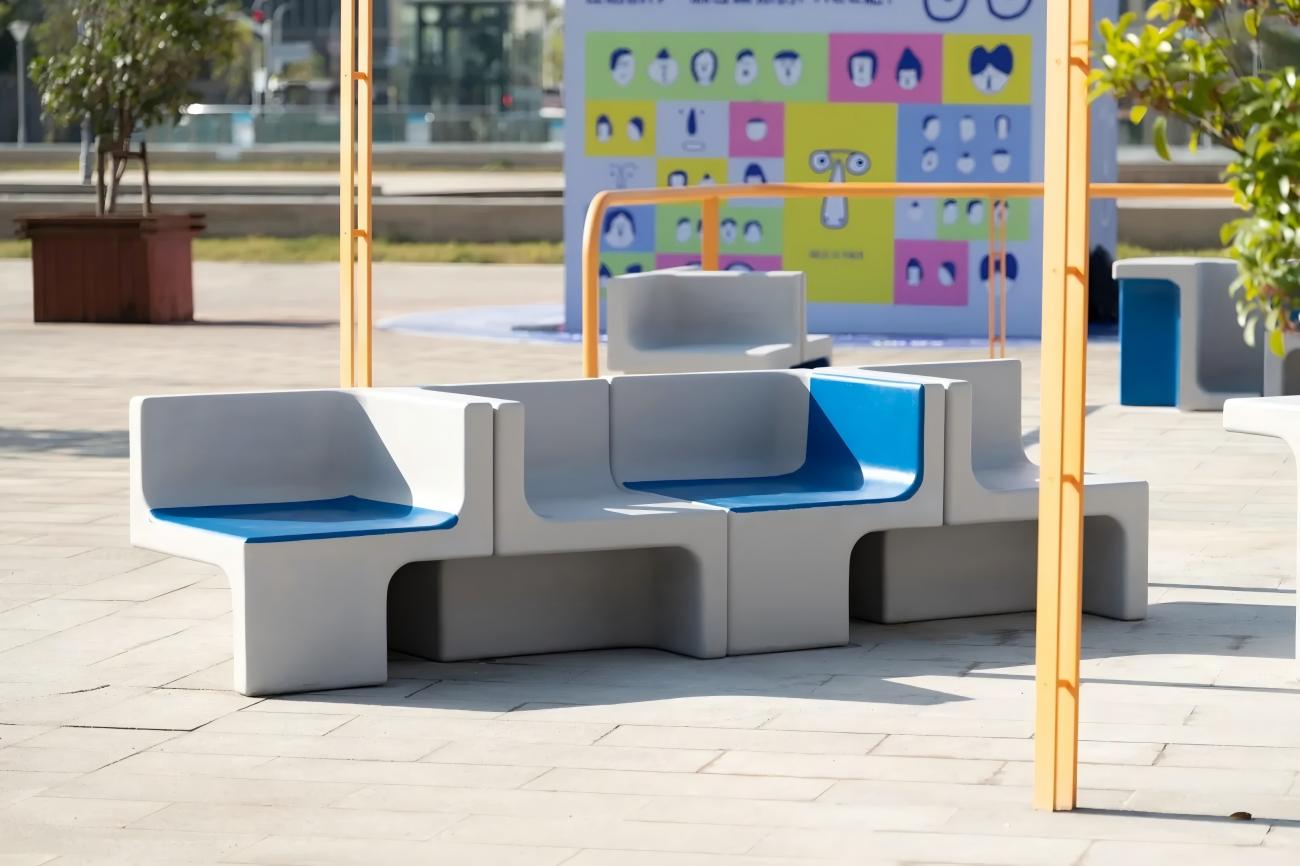
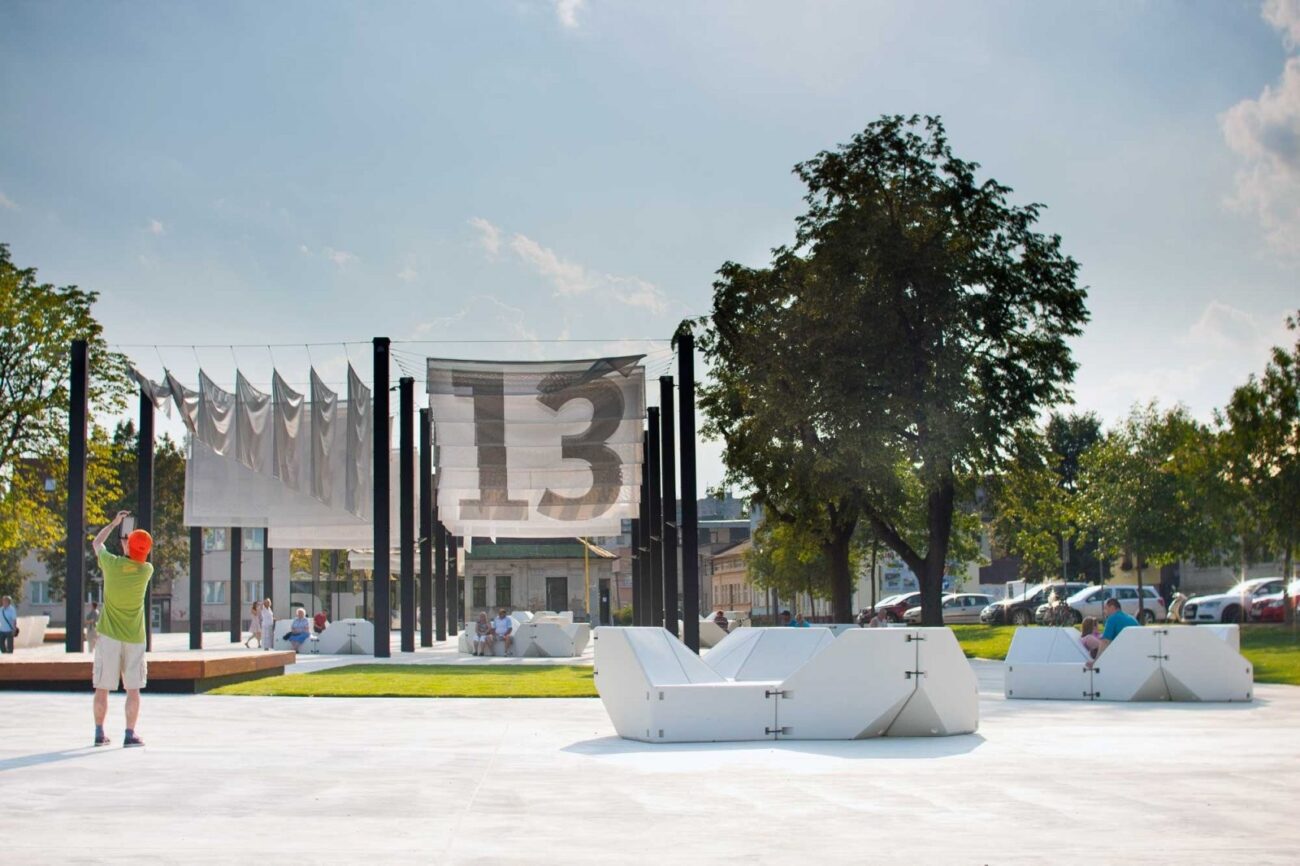
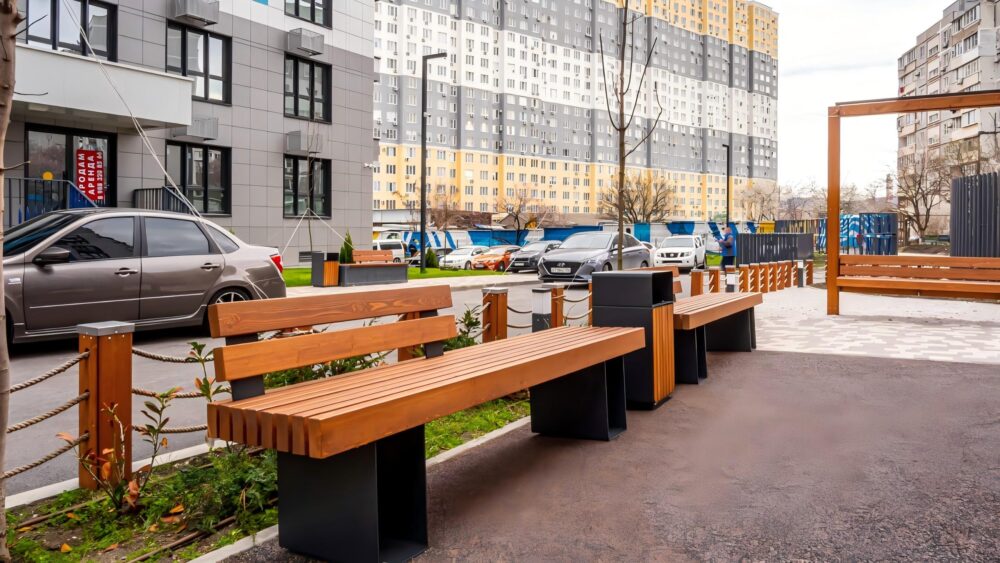
Communities are high-frequency activity zones for people of all ages—especially young children and the elderly. In such environments, a park bench is not merely a resting facility; it is a critical component of the community’s overall safety framework. Given the high level of daily use, even minor design flaws can evolve into potential safety hazards.
Ensuring the safety of community benches should not be treated as an afterthought. It must be addressed at the source—through material selection, structural engineering, and detail design.
1. Material Selection
• Heat Resistance
Metal or dark-colored stone surfaces exposed to intense summer sunlight can quickly reach temperatures exceeding 70°C (158°F), posing a serious risk of skin burns.
For community projects, we recommend the use of GRC (high-performance concrete). Its low thermal conductivity allows the material to maintain a comfortable surface temperature even under prolonged sun exposure, providing natural protection against burns—particularly important for children with sensitive skin.
• Eliminating Risks Caused by Material Aging
Traditional treated wood can develop splinters and cracks over time, while low-grade metal components may corrode at welded joints, creating sharp edges.
GRC offers exceptional chemical stability and mechanical strength. It does not produce splinters, fragments, or rust, fundamentally eliminating the risk of cuts or injuries caused by material degradation.
2. No Sharp Edges
In community settings where children frequently run and play, collision risks are unavoidable.
• Large-Radius Rounded Geometry
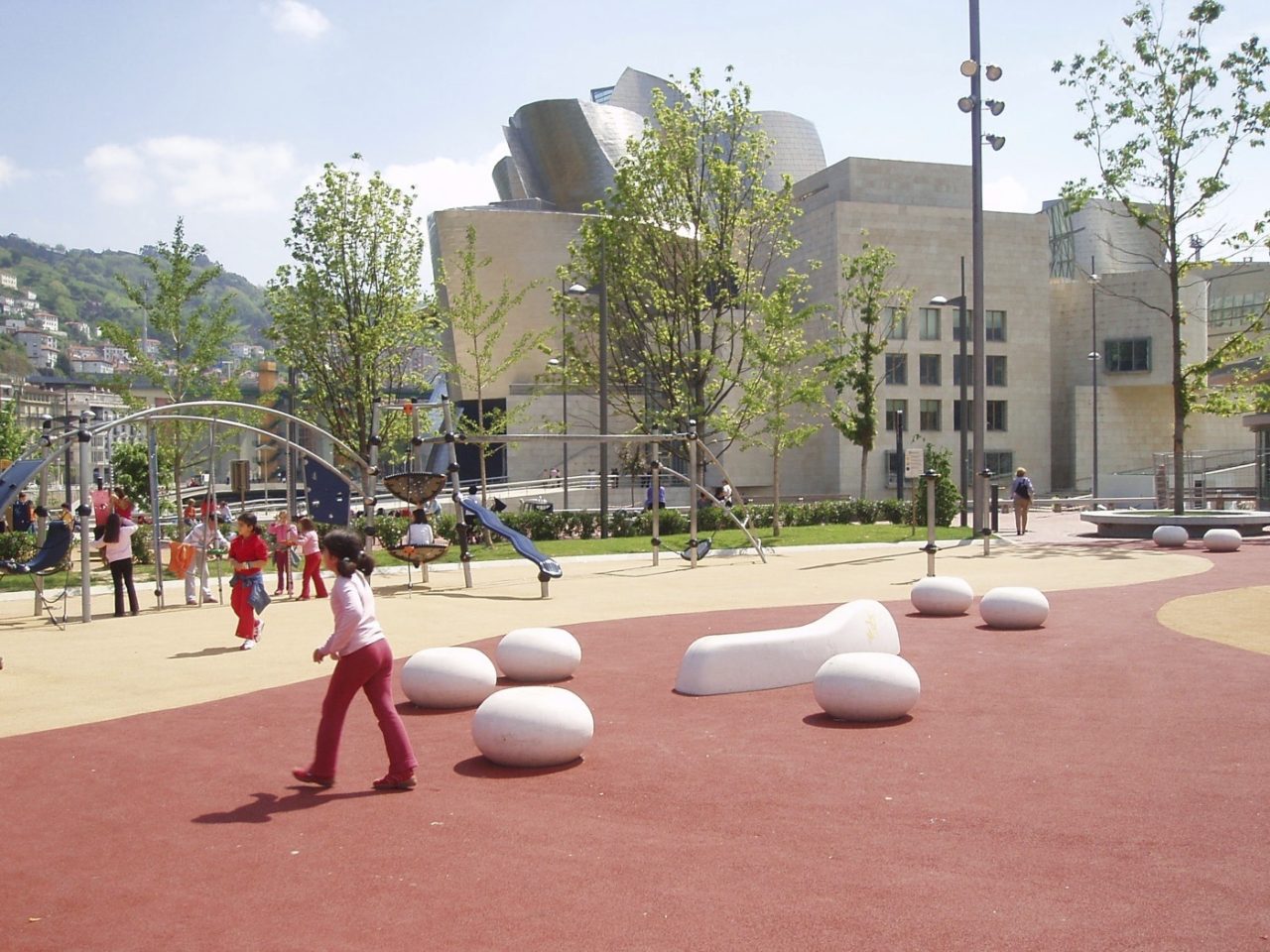
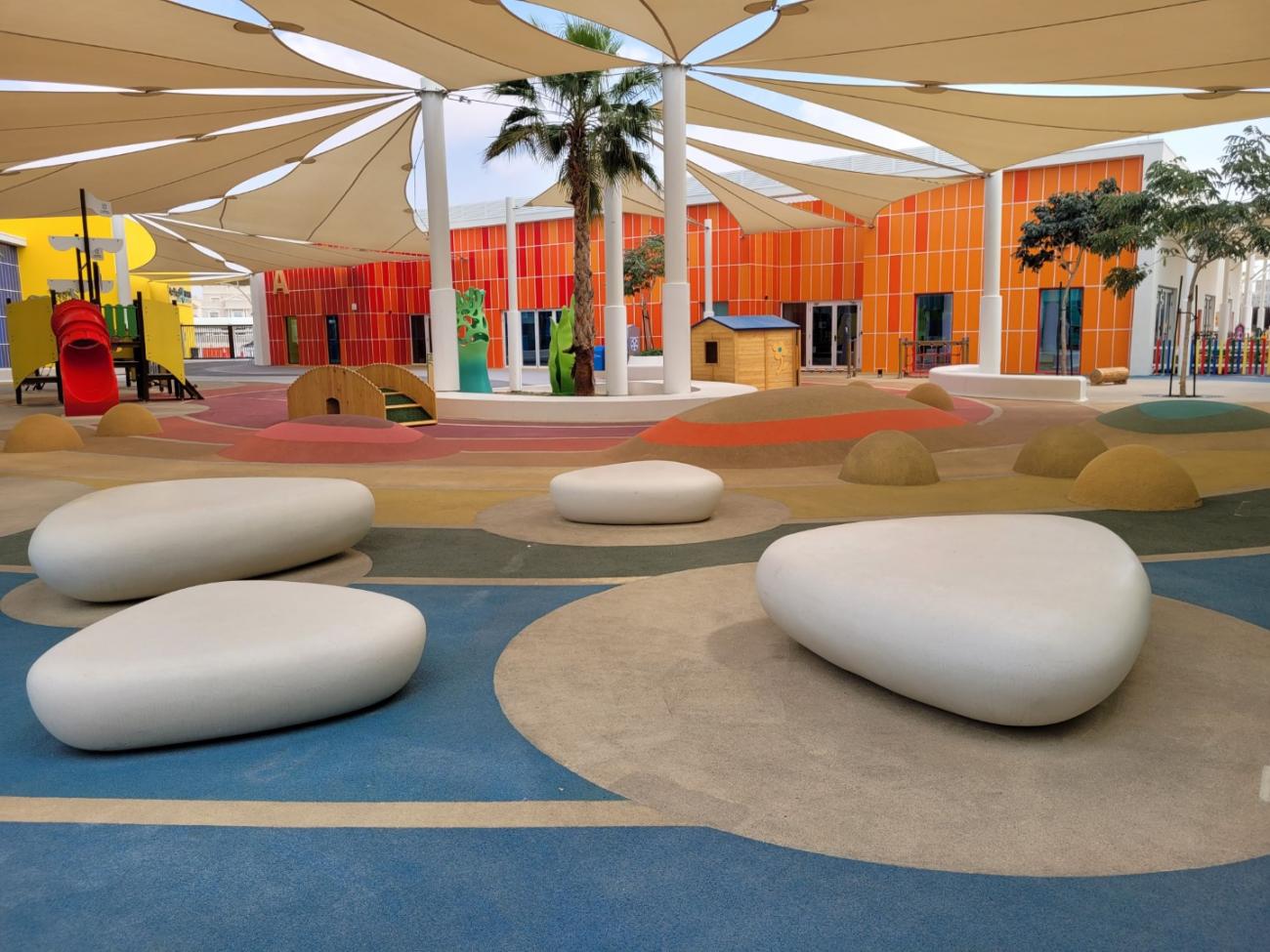
All 90-degree sharp corners are eliminated and replaced with seamless large-radius curves (R-angles). This geometric approach not only enhances aesthetic refinement but, more importantly, disperses impact forces in the event of accidental collisions, significantly reducing injury severity.
• Advantages of GRC
Thanks to the superior moldability of GRC, smoother and more precise curves can be achieved compared to welded metal structures. Seamless surface transitions also eliminate gaps that could pinch fingers or snag clothing.
3. Strength-Oriented Design for the Elderly
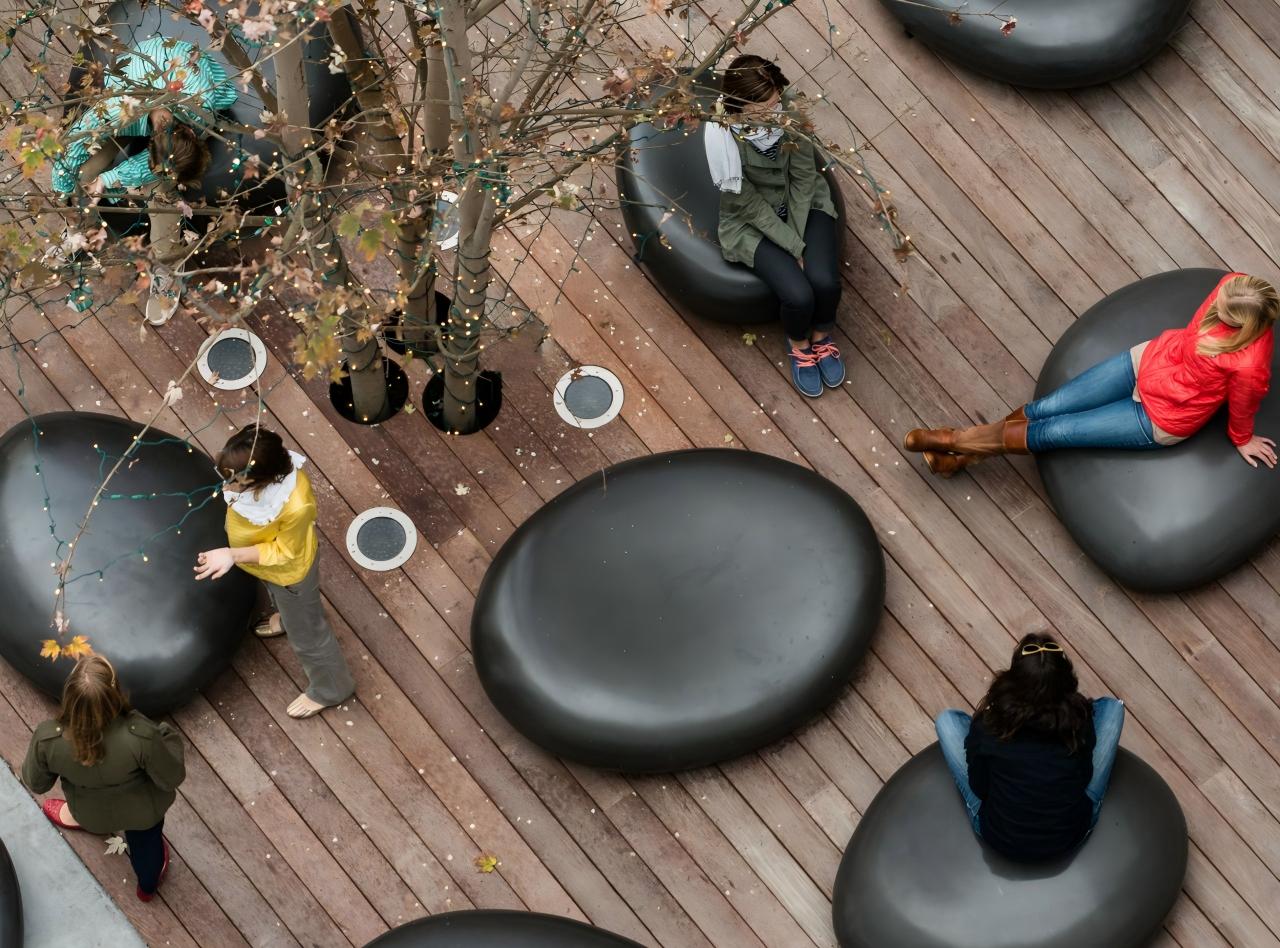
For elderly users, a sense of security often depends on the stability and support available during the sitting and standing process.
• Assistive Armrests
Armrests are critical safety components in community benches. Based on ergonomic analysis of elderly users’ physical characteristics, we optimize armrest height and grip comfort to ensure that upward force can be applied vertically through the arms when standing, thereby reducing strain on the knees.
• Structural Stability and Center of Gravity
Community furniture must demonstrate high structural stability to withstand multiple users or unexpected dynamic movement. A concealed stainless-steel anchoring system ensures the bench remains firmly secured while eliminating exposed fasteners that could cause scratches or tripping hazards.
From design consultation to installation guidance, Urban Furniture provides a comprehensive one-stop service:
-
Project Consultation: Recommend the most suitable and durable materials based on specific community needs.
-
Custom Development: Work closely with your design plans to achieve ergonomic optimization and safe rounded-edge detailing.
-
Strict Quality Control: Direct factory supply ensures smooth, even surfaces while eliminating potential safety hazards.
-
Technical Support: Provide professional guidance for concealed and secure installation, ensuring long-term safety without compromising aesthetics.
True safety originates from both material integrity and meticulous design. At Urban Furniture, we translate complex material science into straightforward, dependable safety solutions. With extensive experience in community projects, we create high-standard, age-inclusive public spaces that serve everyone with confidence and care.