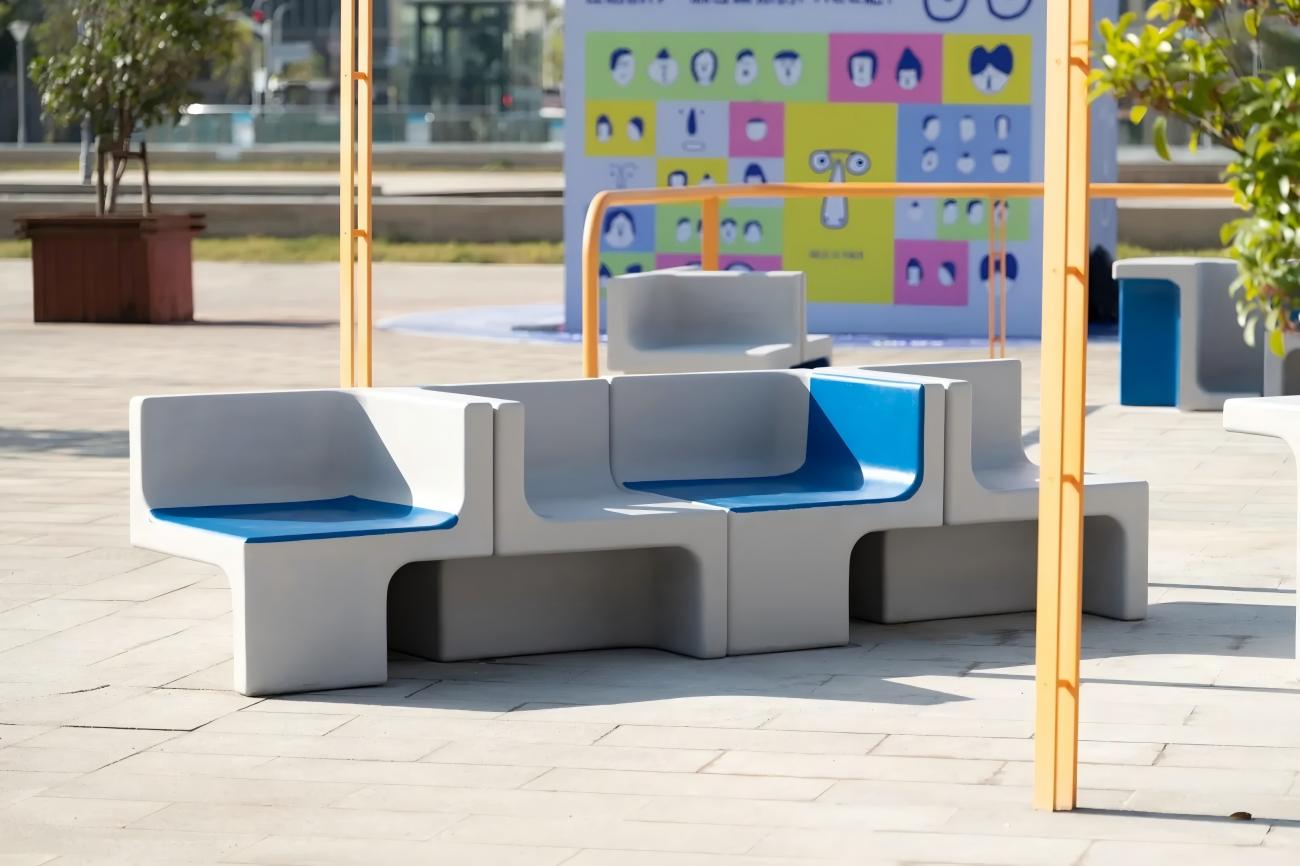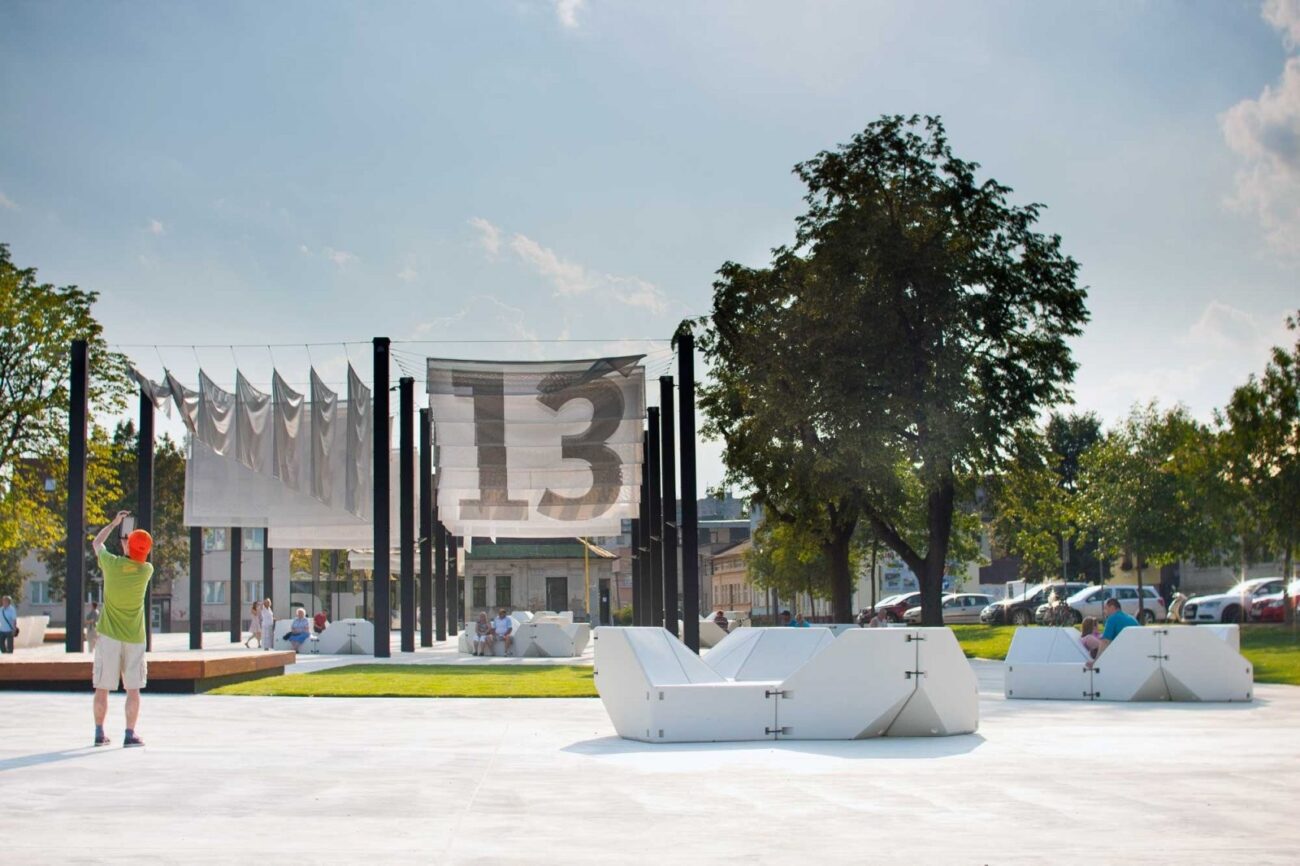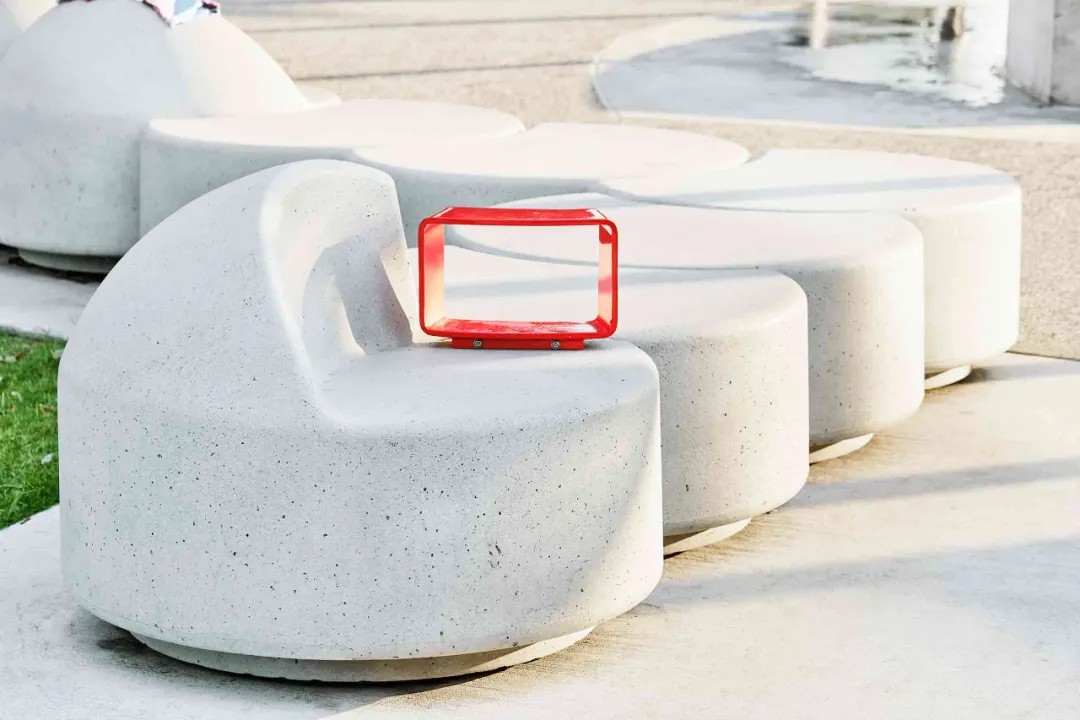
Traditional concrete, known for its strength and durability, has long been used for public seating. However, modern urban design increasingly demands greater freedom of form, lighter structures, and more efficient installation. In this context, Glassfiber Reinforced Concrete (GRC) demonstrates clear advantages. Compared with traditional concrete, GRC offers significantly greater flexibility in the design, fabrication, and application of outdoor benches.
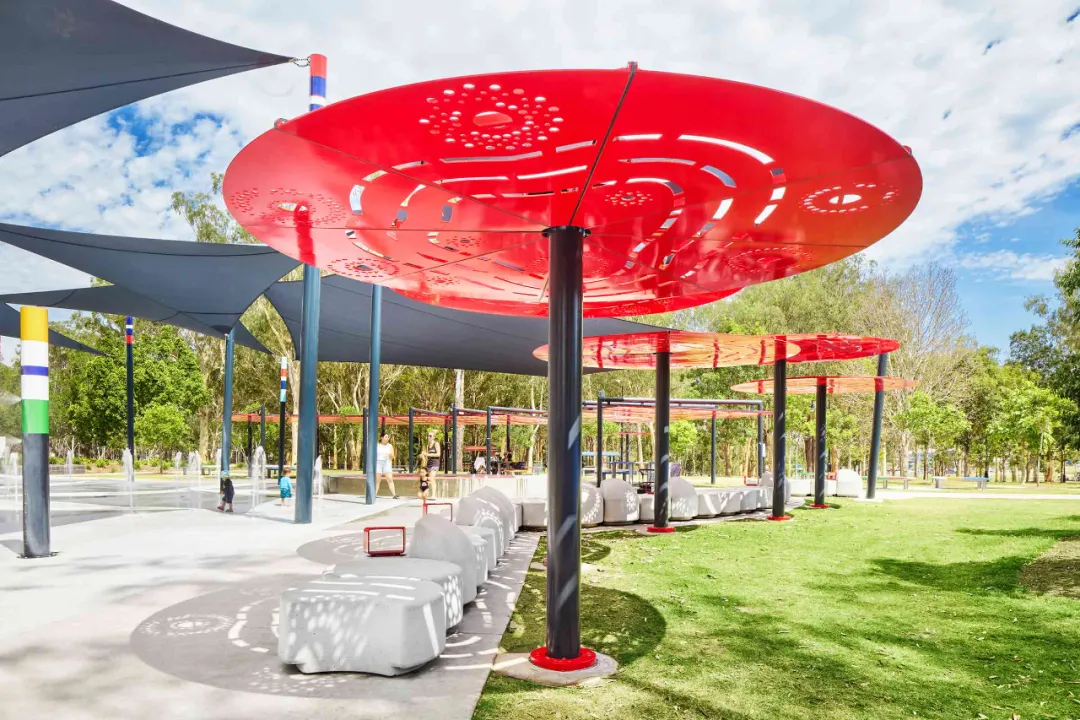
1. Greater Design Freedom to Meet Custom Requirements
Due to the need for thick sections and rigid formwork, traditional concrete benches are typically limited to simple, bulky shapes. Curved seating, organic forms, and designs that integrate seamlessly with the surrounding landscape are difficult and costly to achieve using conventional concrete.
GRC makes the following possible:
- Curved bench designs and complex geometries
- Fully customized design solutions
Because GRC uses glass fibers instead of traditional steel reinforcement, thick cross-sections are not required. This allows designers to create more refined profiles and intricate architectural details without compromising structural strength.
2. Lightweight Yet High-Strength Structure
One of the main limitations of traditional concrete lies in its weight. Solid concrete benches are heavy, difficult to transport, and expensive to install—especially in large-scale public projects.
GRC characteristics include:
- Weight reduction of approximately 60–70% compared with solid concrete
- High compressive and tensile strength
- Excellent crack resistance
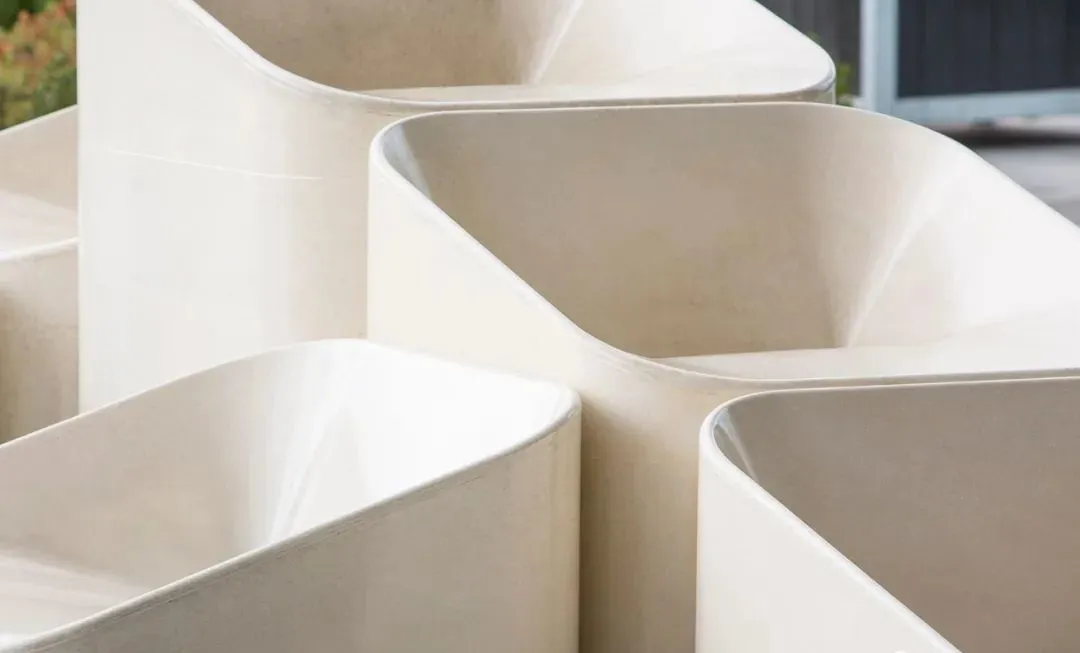
This lightweight structural system offers several advantages:
- Easier transportation and installation
- Reduced foundation requirements
- Greater flexibility in layout and placement
Designers can place benches on rooftops, near water features, terraces, and landscaped areas where traditional concrete structures may not be suitable.
3. Diverse Surface Finishes and Styles
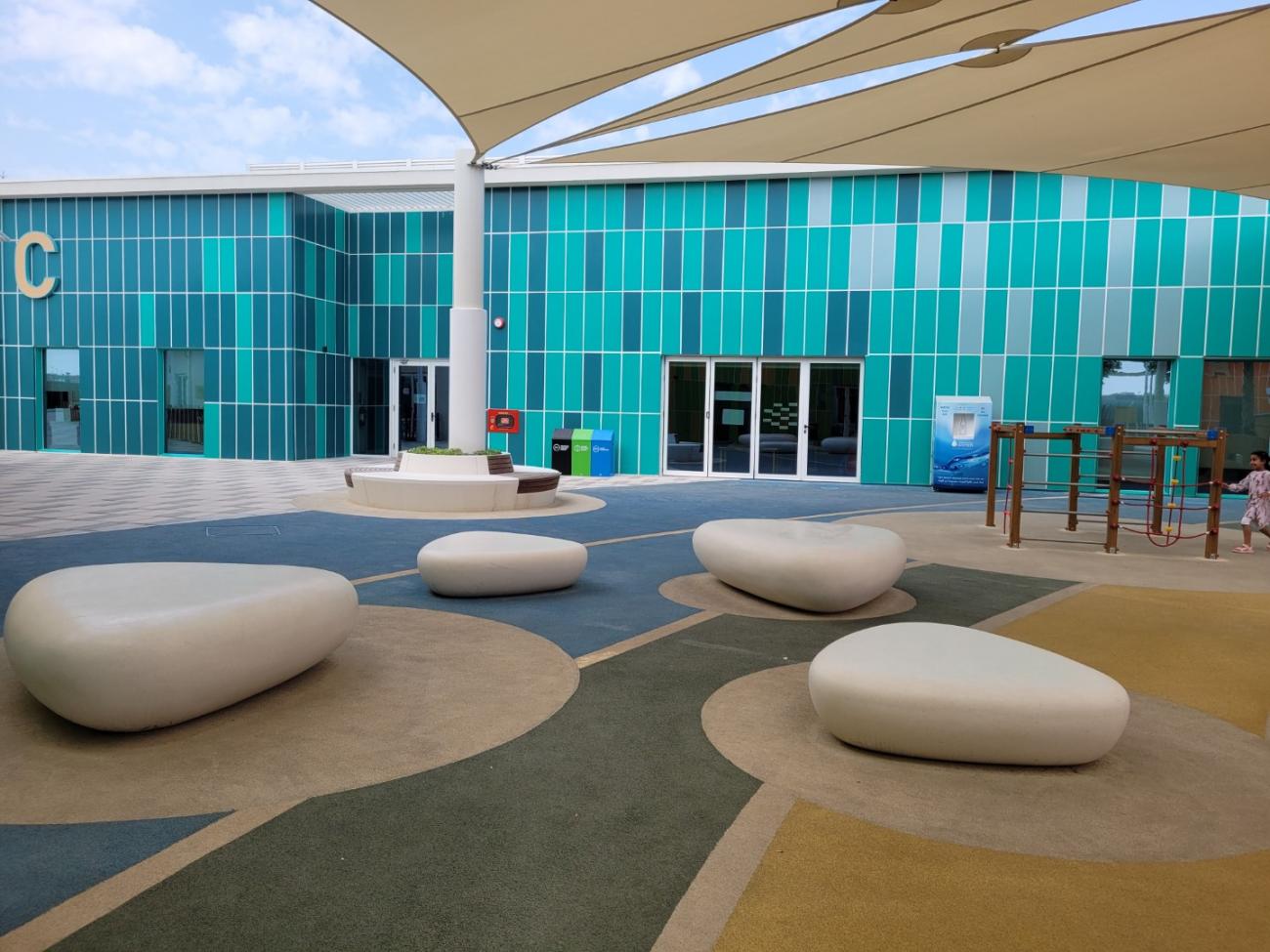
GRC can achieve a wide range of surface effects that are difficult to realize with traditional concrete, including:
- Smooth architectural finishes
- Stone, wood-grain, or natural texture effects
- Pigmented and colored surfaces
- Custom patterns and graphics
This allows GRC benches to adapt easily to different architectural styles, from modern urban plazas to natural park environments.
4. Long Service Life and Low Maintenance Costs
Although GRC components are thinner, they maintain excellent long-term performance:
- High durability and strong resistance to ultraviolet exposure
- Excellent freeze–thaw resistance
- Strong corrosion and weather resistance
- Long product lifespan with low maintenance requirements
Compared with traditional concrete, GRC is less prone to cracking and therefore offers a longer service life in harsh outdoor environments.
For modern urban parks, public plazas, and commercial landscapes, GRC combines practicality, efficiency, and creative flexibility, making it an ideal material for contemporary outdoor seating solutions. With many years of experience in producing GRC outdoor benches and other urban furniture and landscape facilities, we provide one stop services from design to installation.