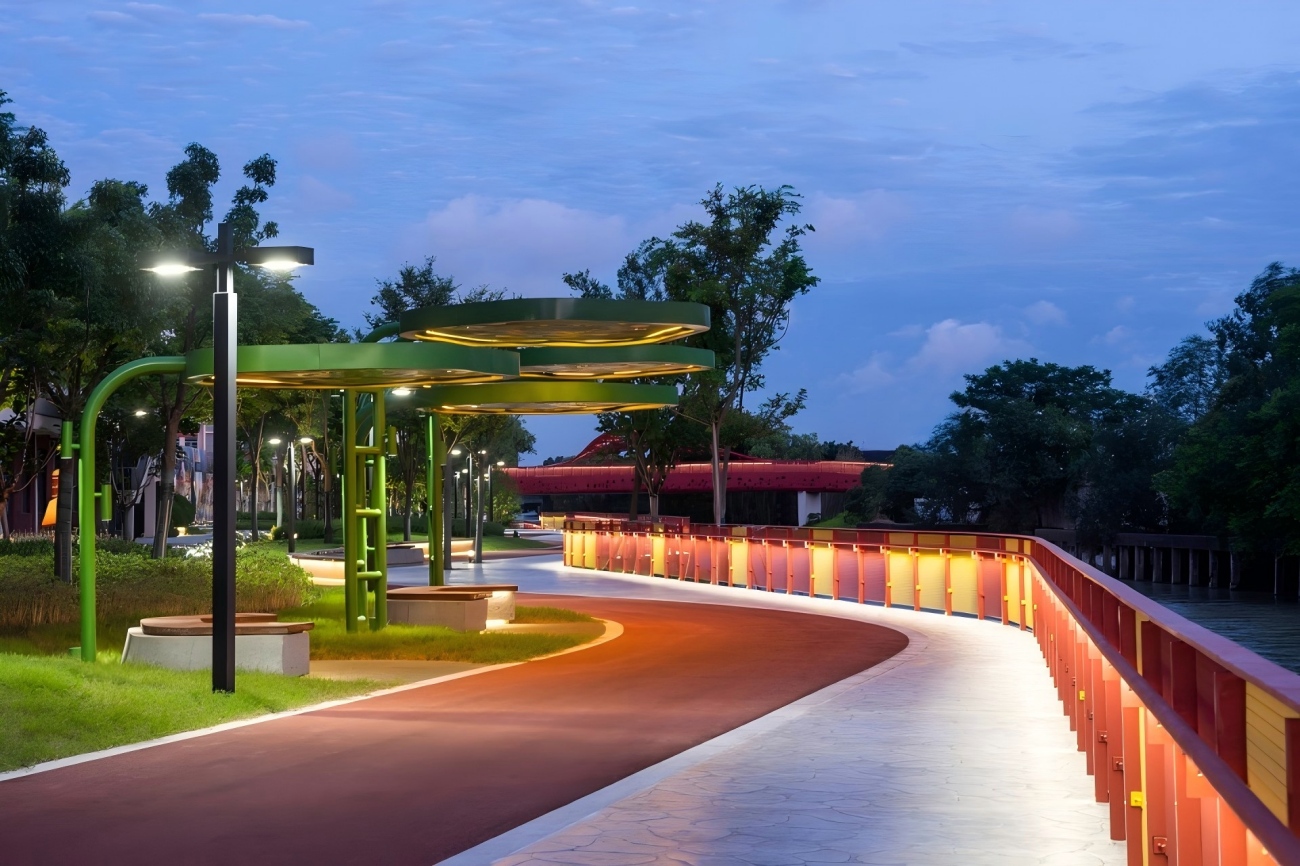
What Are Park Benches Made Of?
Park benches may look simple, but they can be made from many different materials.
Common park bench materials include wood, steel, stainless steel, aluminum, concrete, GRC and composite materials. The material affects not only the appearance of a bench, but also its weight, form, comfort and suitability for different types of projects.
So when choosing a park bench, the goal is not to find one “best” material. It is to select the material that best suits the project environment and how the bench will be used.
1. Wood
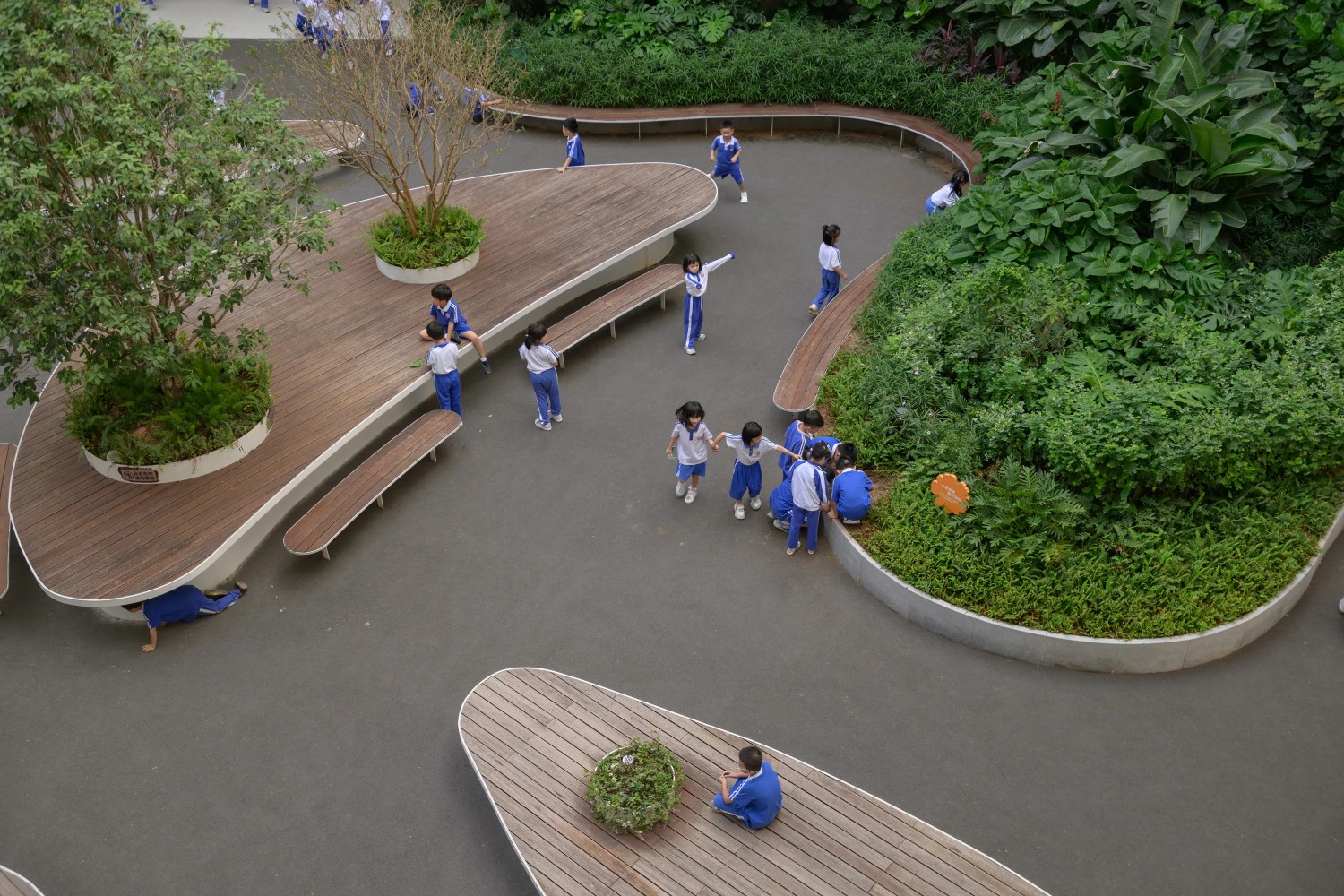
Wood is one of the most common materials used for park benches, especially in natural landscapes and recreational spaces.
Common characteristics include:
- A natural and comfortable surface feel;
- Wood grain and color that work well with planting, lawns and landscape surroundings;
- Suitable for seats, backrests and armrests;
- Can be combined with metal, GRC and other materials.
However, outdoor wood is continuously exposed to sunlight, rain and humidity.
When selecting wood for outdoor benches, it is important to consider:
- Wood species;
- Outdoor weather resistance;
- Surface treatment;
- Long-term maintenance requirements.
Many projects use a metal frame with wooden seating, combining the natural feel of wood with a more stable supporting structure.
2. Steel and Stainless Steel
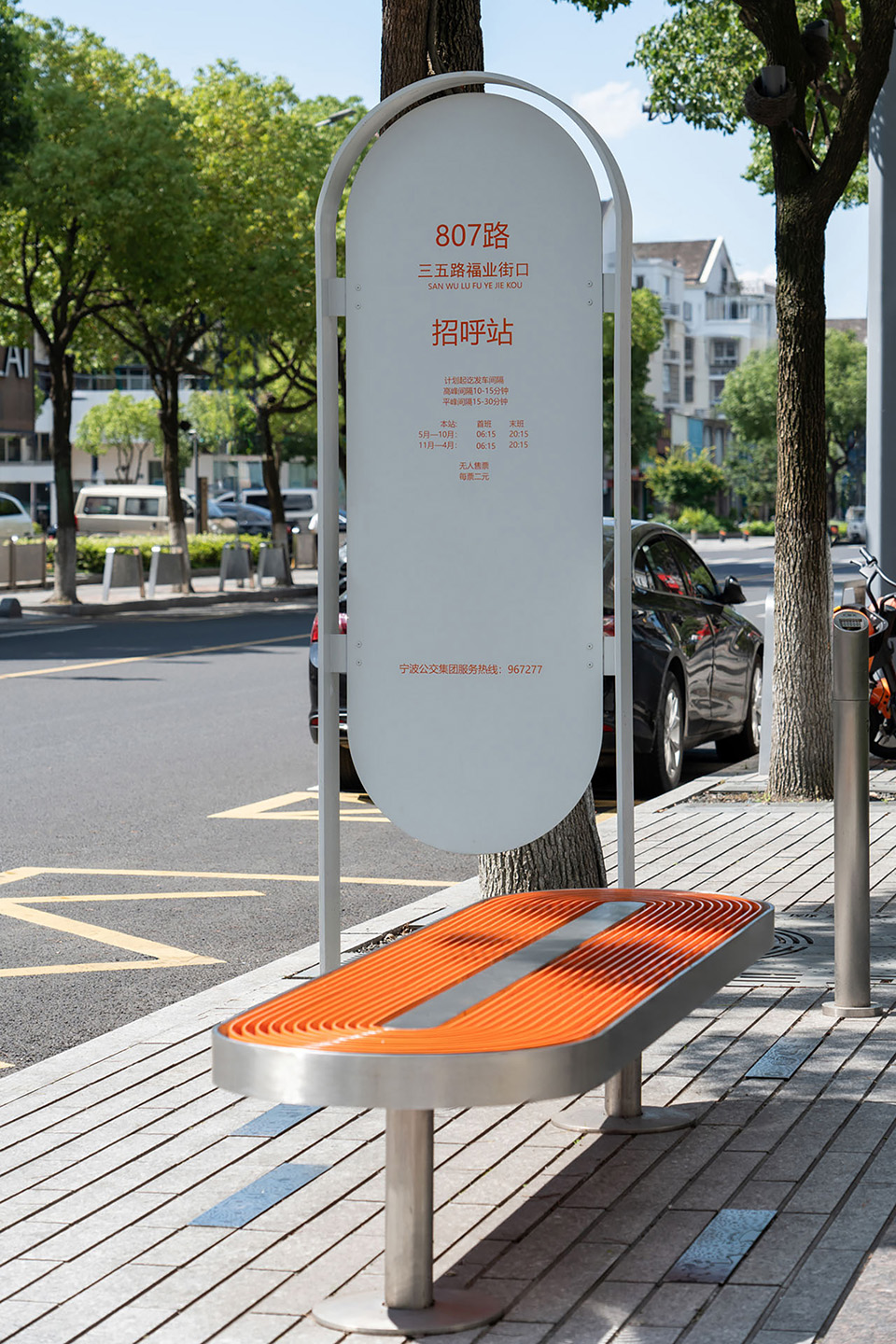
Steel and stainless steel are also widely used for outdoor benches.
They can be used for:
- Main frames;
- Legs;
- Backrests;
- Armrests;
- Metal seating surfaces;
- Custom structural forms.
Regular steel normally requires coatings or other protective surface treatments for outdoor use.
Stainless steel is more suitable for projects that require better corrosion resistance and a modern appearance.
Common features of metal benches include:
- Stable structures;
- Suitable for frequent public use;
- Easy to form into clean and modern designs;
- Can be combined with wood, GRC and other materials;
- Suitable for customized sizes and structures.
For this reason, metal benches are commonly used in commercial streets, urban plazas, transport areas and modern landscape projects.
In hot and sunny regions, however, the surface temperature of metal should also be considered.
If seating is exposed to direct sunlight for long periods, product color, surface finish and shade conditions should be considered together.
3. Aluminum
Aluminum is often used for modern outdoor benches and is also suitable for projects where product weight is an important consideration.
Its main characteristics include:
- Lighter than many steel structures;
- Does not have the same common rusting issue as ordinary steel;
- Can be coated or treated with different surface finishes;
- Suitable for clean and contemporary product forms.
For projects that require frequent transportation, handling or installation under limited site conditions, product weight can also influence material selection.
4. Concrete and GRC
Concrete benches are also common in parks and large public spaces.
Traditional concrete typically offers:
- Higher weight;
- Strong stability;
- Low risk of being easily moved;
- Suitability for permanently installed public seating.
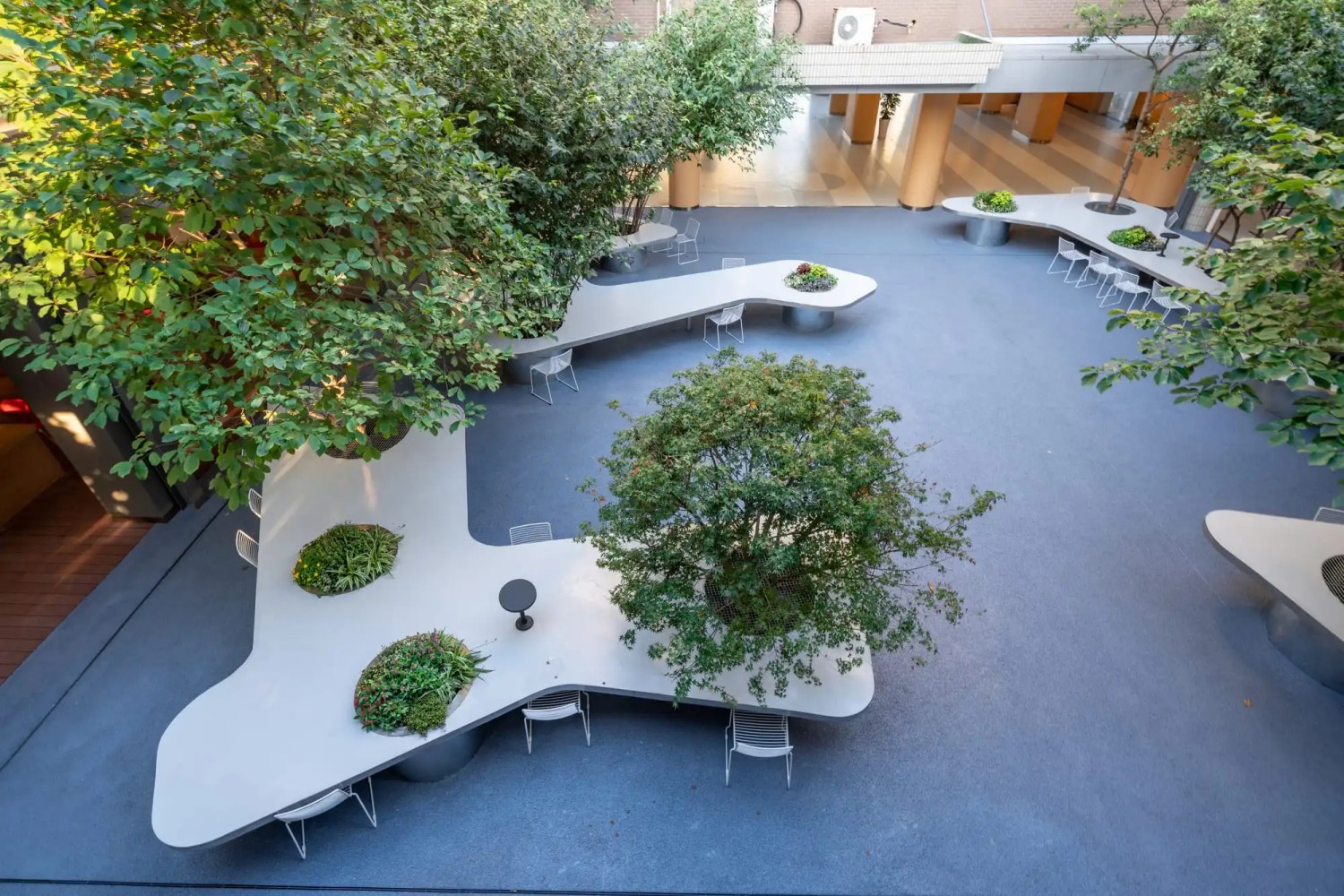
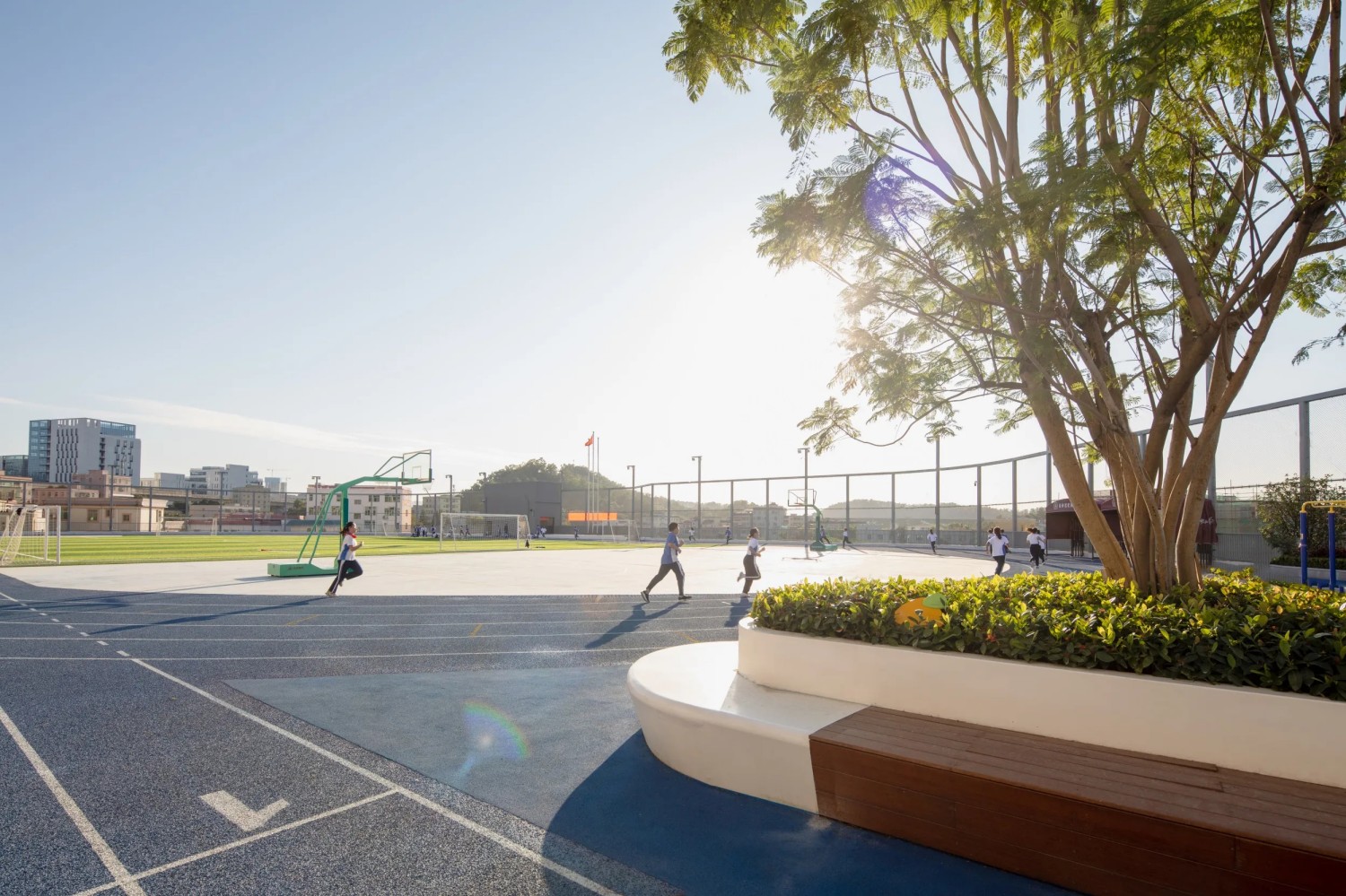
In addition to traditional concrete, GRC is increasingly used in modern street furniture.
GRC stands for Glass Fiber Reinforced Concrete.
Compared with traditional concrete, GRC can more easily achieve a wider range of forms, such as:
- Curved seating;
- Circular seating;
- Flowing bench forms;
- Integrated seating;
- Bench and planter combinations;
- Large custom landscape furniture.
For projects that require special forms, or where the bench itself is intended to become part of the landscape, GRC benches can provide greater design flexibility.
5. Recycled Plastic and Composite Materials
Some park benches also use recycled plastic or other composite materials.
These materials are commonly used for:
- Seat boards;
- Backrests;
- Wood-look alternatives;
- Park and community furniture.
Possible characteristics include:
- Reduced use of natural wood;
- Easier cleaning for some products;
- A range of colors and surface effects;
- Suitable for use with metal supporting structures.
However, the performance of different composite materials can vary significantly.
For actual outdoor projects, it is still important to confirm:
- Whether the material is suitable for long-term outdoor use;
- Whether it may fade under UV exposure;
- Whether the surface is easy to clean;
- Whether it is likely to deform;
- Whether it is suitable for the local climate;
- Whether damaged components can be easily replaced.
The term “composite material” alone is not enough to determine how a product will perform.
6. Many Park Benches Use More Than One Material
In real projects, many park benches are made from two or more materials.
Common combinations include:
- Steel + Wood;
- Stainless Steel + Wood;
- GRC + Wood;
- GRC + Metal;
- Aluminum + Composite Material.
Different materials can serve different purposes.
For example:
- Metal can provide the main structural support;
- Wood can create a more natural seating surface;
- GRC can form the main shape or base;
- Composite materials can be used for outdoor seats and backrests.
Therefore, choosing a park bench does not always mean choosing between wood and metal.
Many projects combine different materials according to structural, visual and functional requirements.
7. How Should You Choose the Right Material for a Park Bench?
Before choosing the material, it helps to answer a few basic questions:
- Where will the bench be installed?
- What is the local climate?
- Is the project close to the coast?
- Is the site exposed to strong sunlight?
- Is pedestrian traffic high?
- Will users take short breaks or stay for longer periods?
- Is the project style more natural or contemporary?
- Does the bench require a special form?
- Is regular maintenance easy to arrange?
Different projects may require very different materials.
For example:
- Natural landscape projects: Wood or wood-and-metal combinations may be suitable;
- High-traffic public spaces: Structural stability and durability become more important;
- Coastal projects: Corrosion resistance should receive more attention;
- Hot climates: The surface temperature of the seating under strong sunlight should be considered;
- Custom landscape projects: GRC or mixed-material designs may provide more flexibility;
- Modern commercial projects: Metal, GRC or clean mixed-material designs may be more appropriate.
When selecting park bench materials, the most important question is whether the material suits the project’s climate, use, design requirements and maintenance conditions.
Conclusion
Park benches can be made from wood, steel, stainless steel, aluminum, concrete, GRC, composite materials or a combination of several materials.
No single material is suitable for every outdoor project.
Urban Furniture can provide GRC, metal, wood and mixed-material benches for parks, commercial streets, urban plazas and other public space projects, with customized sizes, materials, colors and surface finishes based on project requirements.