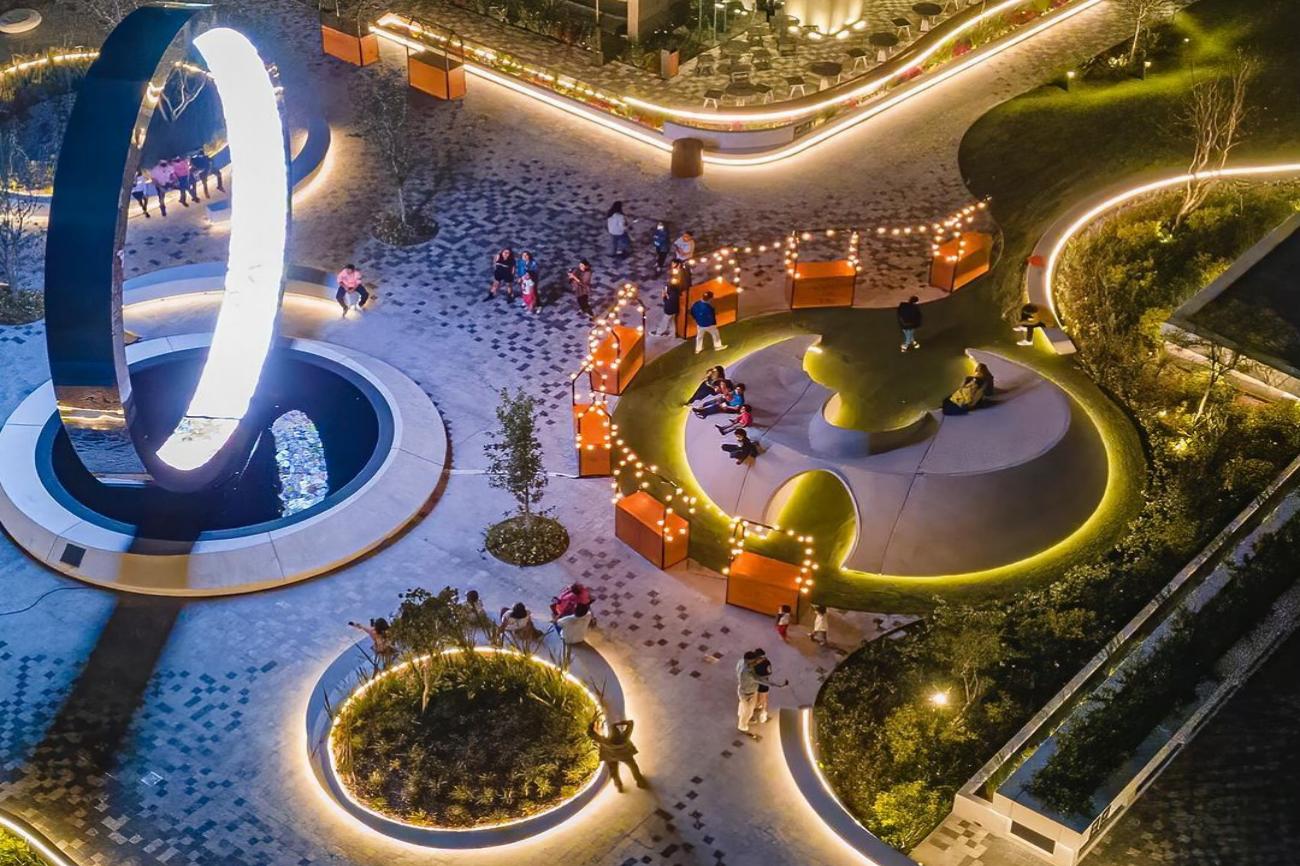
How Does Lighting Improve Street Furniture?
Many types of street furniture work well during the day, but at night, benches, planters, bollards and signage can become difficult to see and may be used less often.
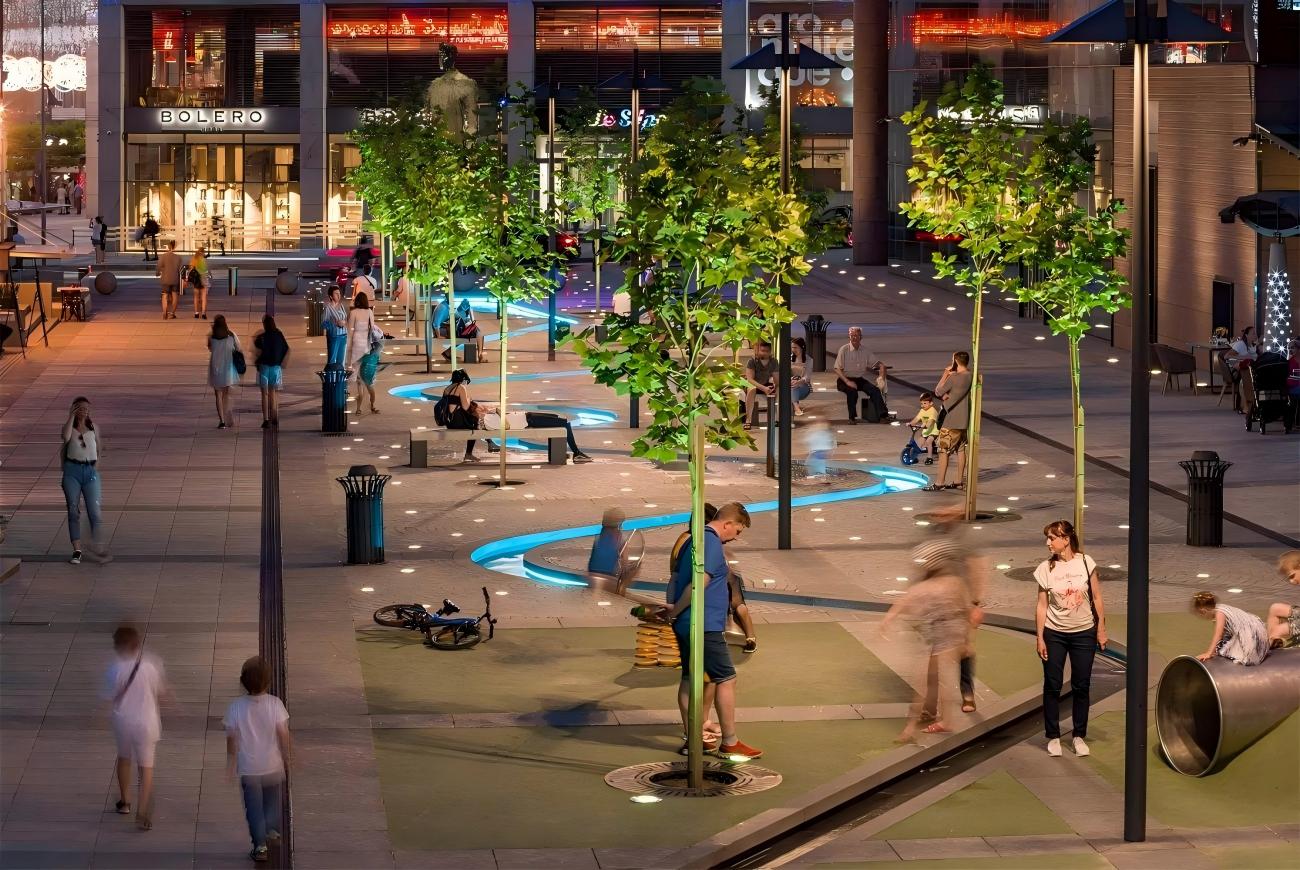
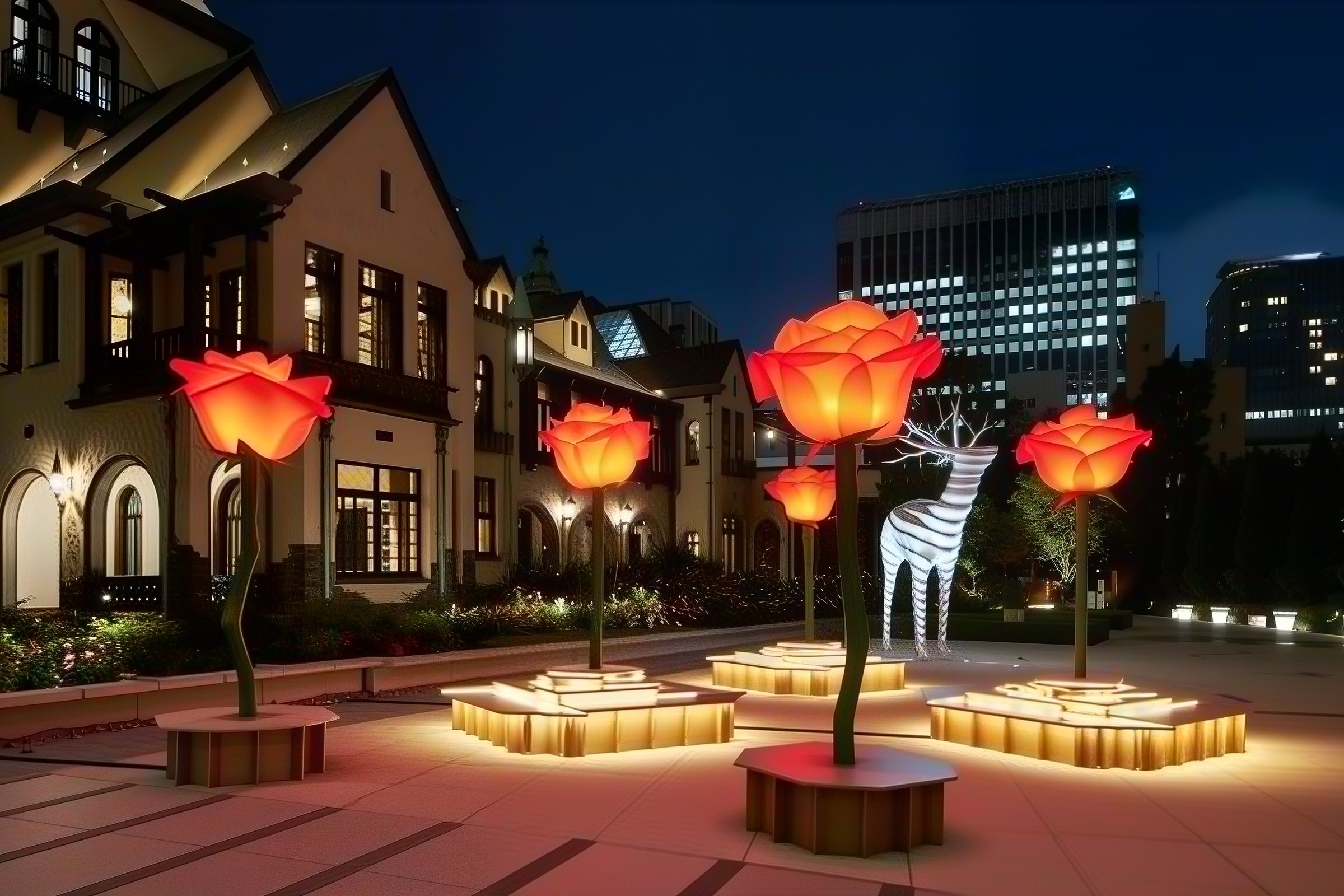
Appropriate lighting is not only about making products look better. For commercial streets, plazas, parks, waterfront spaces and transport waiting areas, street furniture lighting can also improve nighttime use, visibility and wayfinding.
1. Lighting Can Extend the Use of Street Furniture
Many public spaces remain active at night and still need functional outdoor furniture.
For example:
- Commercial streets and shopping areas may stay open late;
- Outdoor areas in hotels and resorts may still be used at night;
- Waterfront promenades and parks may continue to receive visitors;
- Bus and taxi waiting areas may need to operate throughout the day;
- Building entrances and drop-off areas still need to be clearly visible at night.
If benches and other street furniture have no lighting at all, they may become harder to notice after dark, which can reduce people’s willingness to use them.
With suitable lighting, benches, planters and other facilities that are mainly used during the day can continue to serve people at night.
For contractors, this means that product selection should consider not only daytime appearance, but also whether the project has regular nighttime use.
2. Lighting Helps People See Street Furniture and Space Boundaries
Street furniture is often installed in busy public spaces.
At night, low-level products can be difficult to see when lighting is limited. These may include:
- Bench edges;
- Planters;
- Bollards;
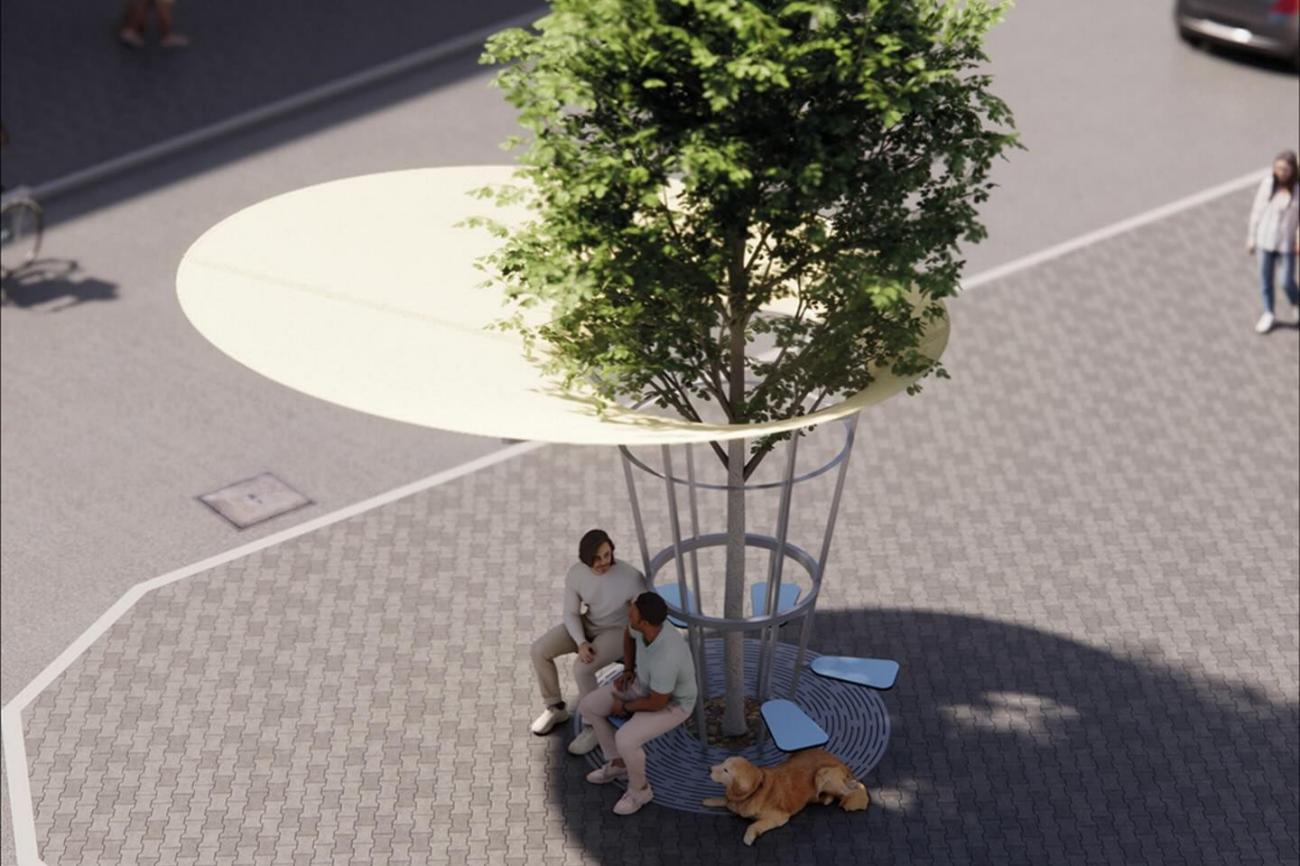
- Tree surround seating;
- Low walls and barriers;
- Furniture close to steps.
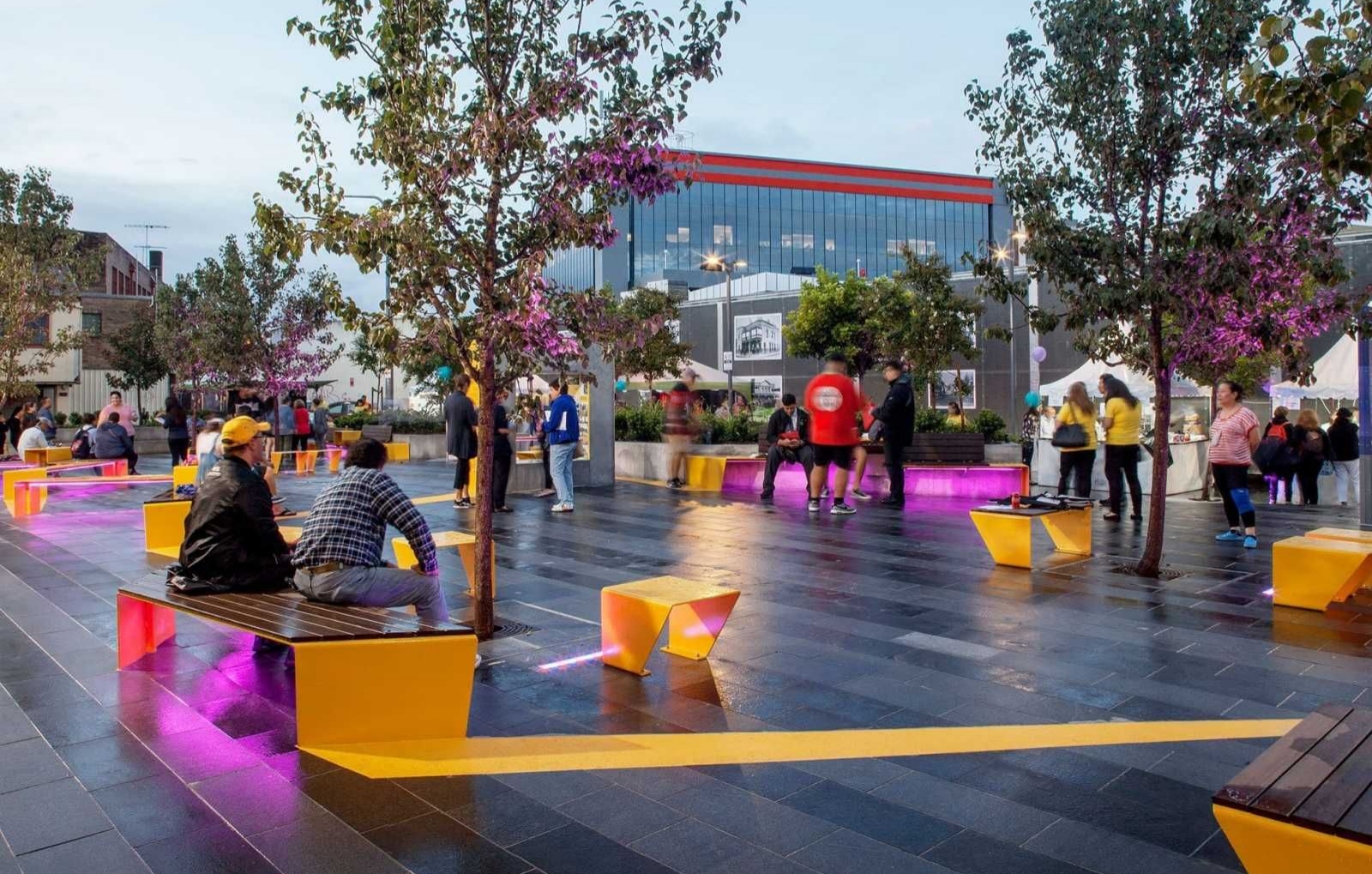
Suitable lighting can make product edges and surrounding areas easier to identify, helping people understand what is around them while walking at night.
For example:
- Lighting under benches can make seating areas easier to locate;
- Illuminated bollards can help separate pedestrian and vehicle areas;
- Illuminated planters can help define space boundaries;
- Lit signage can make entrances and directions easier to find.
The lighting does not always need to be very bright.
In many cases, the main purpose of lighting integrated into street furniture is not to illuminate the whole public space, but to make the furniture itself and the surrounding area easier to see.
3. Lighting Can Help Guide Pedestrian Movement and Define Different Areas
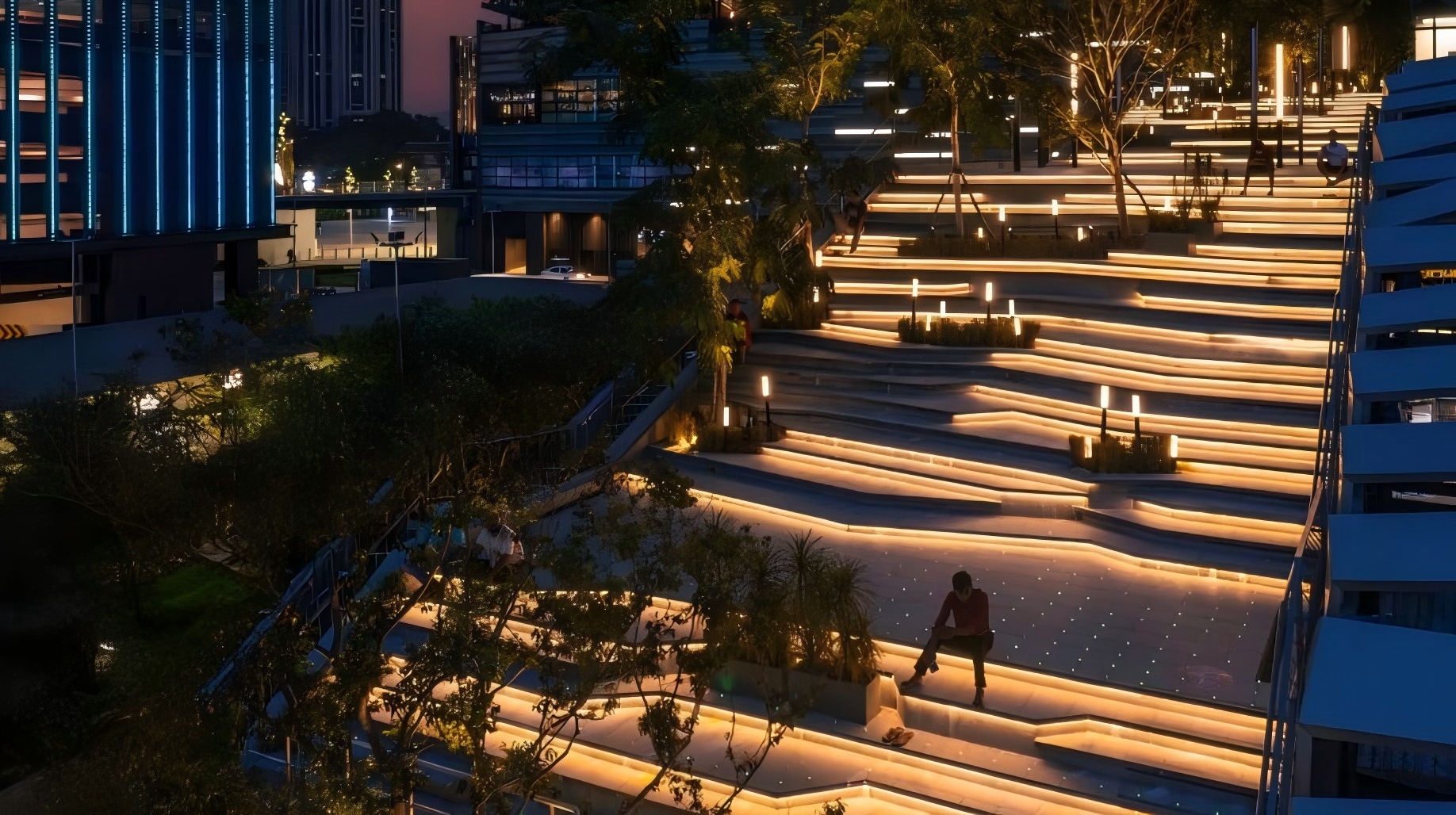
Street furniture can provide seating, planting and separation functions, while lighting can also help people understand how a space is organized.
For example:
- Illuminated bollards can mark main pedestrian routes;
- Illuminated planters can separate outdoor dining areas from public walkways;
- Lighting under benches can help identify rest areas;
- Lit signage can guide people toward entrances, parking areas or other public facilities;
- A continuous series of illuminated street furniture can help create a clear walking route.
This function is especially useful in larger commercial plazas, parks and waterfront projects.
For contractors, street furniture lighting can also be coordinated with the overall project lighting plan. This helps avoid situations where certain areas remain too dark after the furniture has already been installed, requiring additional lighting later.
4. Which Projects Are Better Suited to Illuminated Street Furniture?
Illuminated street furniture is generally more useful in projects with frequent nighttime activity or where clearer visibility and wayfinding are needed.
Typical applications include:
- Commercial streets and shopping plazas;
- Outdoor areas of hotels and resorts;
- Parks and urban plazas;
- Waterfront promenades;
- Building entrances and drop-off areas;
- Transport waiting areas;
- Public spaces with long nighttime operating hours.
Different areas have different needs.
For example, a commercial street may focus more on nighttime use and overall appearance. A transport waiting area may need clearer seating and pedestrian routes. A building entrance may place more emphasis on wayfinding and entrance visibility.
Therefore, not every piece of street furniture needs lighting. It is usually more practical to focus on areas with frequent nighttime use, higher wayfinding needs or limited visibility.
5. What Should Be Considered Before Adding Lighting?
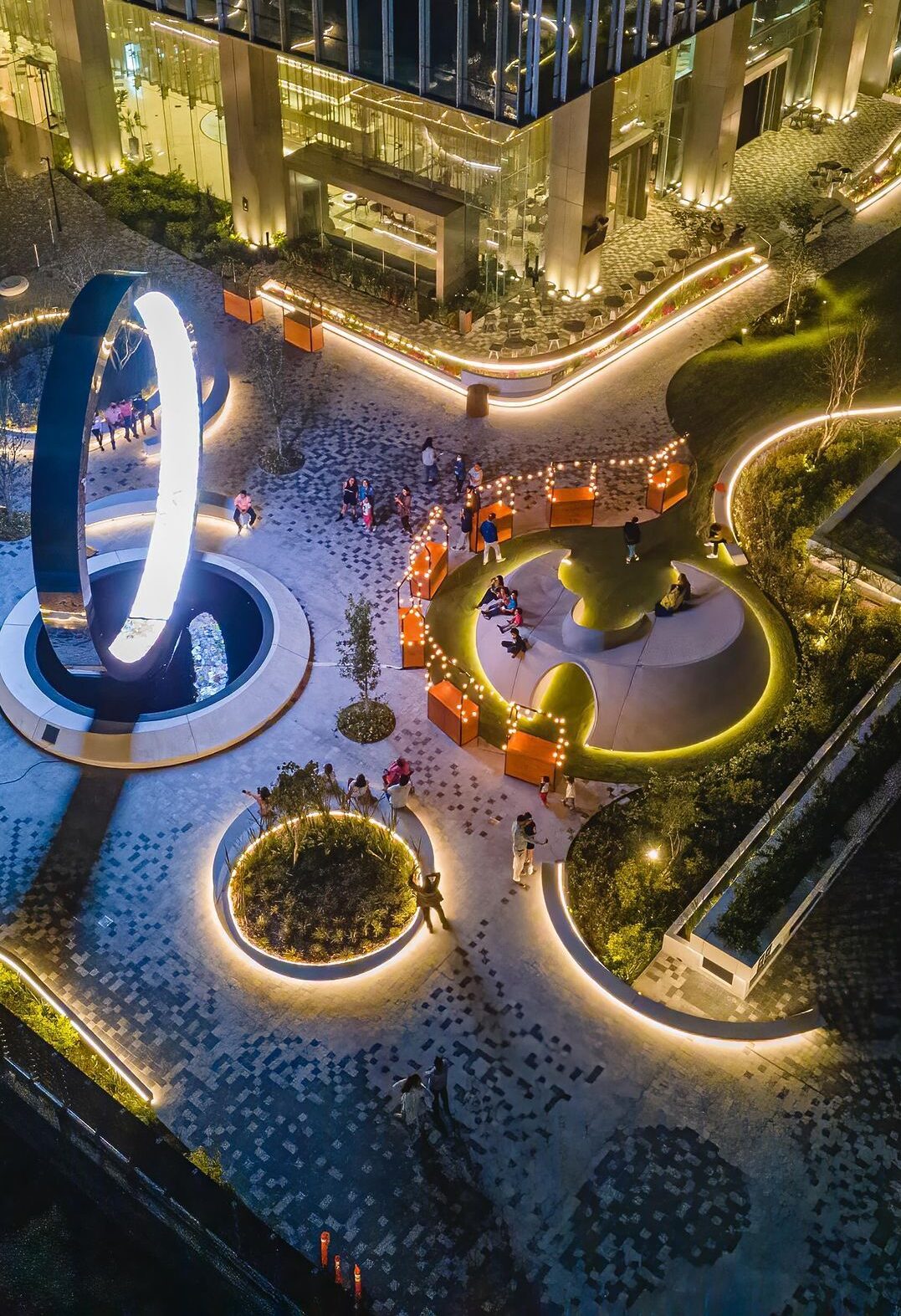
Street furniture with integrated lighting has additional requirements for power supply, wiring and long-term maintenance.
For contractors, the following should ideally be confirmed before production and installation:
- Whether a power supply needs to be reserved;
- Where the power supply will come from;
- How wiring will enter the product;
- Whether conduits need to be installed before paving is completed;
- Whether outdoor electrical components are suitable for long-term use;
- Whether lighting components are easy to inspect and replace;
- Whether regular cleaning and maintenance will be convenient;
- Whether the lighting level is suitable for the surrounding environment;
- Whether installation will affect other electrical or paving works.
These details do not always need to be fully resolved during the first quotation stage.
For custom street furniture with lighting, the supplier should provide power, wiring and installation requirements during the detailed design stage according to the product structure, so the project team can prepare the necessary site conditions in advance.
This can reduce problems such as discovering too late that no power supply has been reserved, the cable location is unsuitable, or finished paving needs to be removed and rebuilt.
Conclusion
Adding lighting to street furniture is not only about decoration.
Well-planned lighting can help benches and other public facilities remain useful at night, improve visibility, and help people find rest areas, entrances and main pedestrian routes.
For contractors, if a project has regular nighttime use, lighting should ideally be considered during the street furniture selection and detailed design stage.
Urban Furniture can provide design, production and installation support for illuminated benches, planters, bollards, signage and other custom street furniture based on site conditions, nighttime use requirements and product functions.