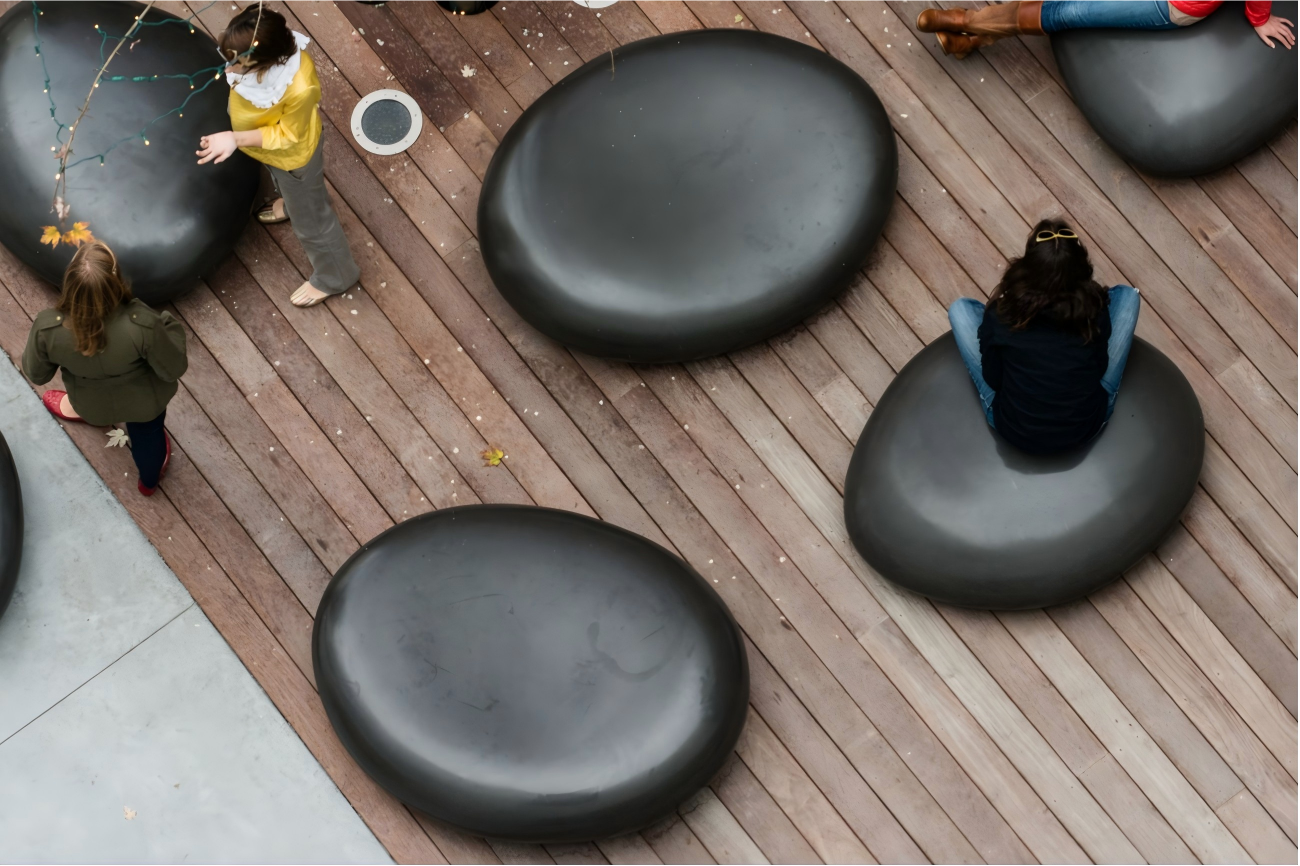
In Middle Eastern regions such as Saudi Arabia and the UAE, outdoor seating faces extremely harsh environmental challenges. Intense UV radiation can cause materials to become brittle and fade, while extreme surface temperatures (often exceeding 60°C / 140°F) pose safety risks for users. In addition, dramatic day–night temperature fluctuations can easily lead to structural cracking. Persistent sand and dust further create severe challenges for abrasion resistance and ease of maintenance.
Therefore, in dry, high-temperature, and high-wear environments, selecting the right materials and engineering solutions is critical.

I. Key Material Choices for High-Temperature Environments
Different materials perform very differently in desert climates and should be selected based on project requirements:
- GRC / GFRC
Offers excellent high-temperature resistance and is less prone to cracking.
Also provides high design flexibility, making it ideal for customized projects. - Traditional Concrete
Heavier in weight and more susceptible to cracking under temperature fluctuations. - Stainless Steel / Metal Materials
High structural strength and well-suited for modern urban environments.
However, surface temperature control and anti-corrosion treatment must be carefully considered. - Wood / Composite Materials
Provide a natural and comfortable visual appearance.
However, they generally require higher maintenance in hot and dry climates.
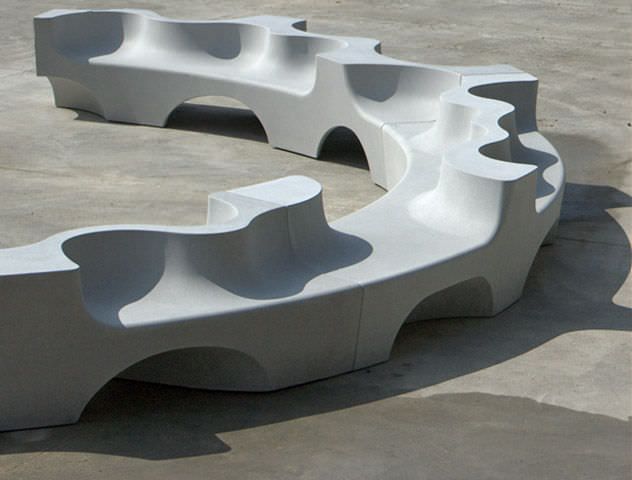
II. Integrated Considerations: Design, Durability, and Maintenance
In desert and high-temperature environments, outdoor benches must balance design intent with long-term performance and maintenance efficiency:
- Surface Temperature Control
Select materials or light-colored finishes that minimize heat absorption and reduce burn risk. - Structural Stability
Ensure robust structural design to withstand strong winds and high-frequency use in public spaces. - Crack Resistance and Aging Performance
Materials should remain stable under extreme heat and temperature fluctuations, avoiding deformation or cracking. - Sand and Abrasion Resistance
Surfaces must be durable enough to resist long-term erosion from wind-blown sand. - Surface Treatment and Safety
Incorporate anti-slip and heat-resistant features to enhance user safety. - Ease of Cleaning
Surfaces should resist dust accumulation and allow for easy routine maintenance.
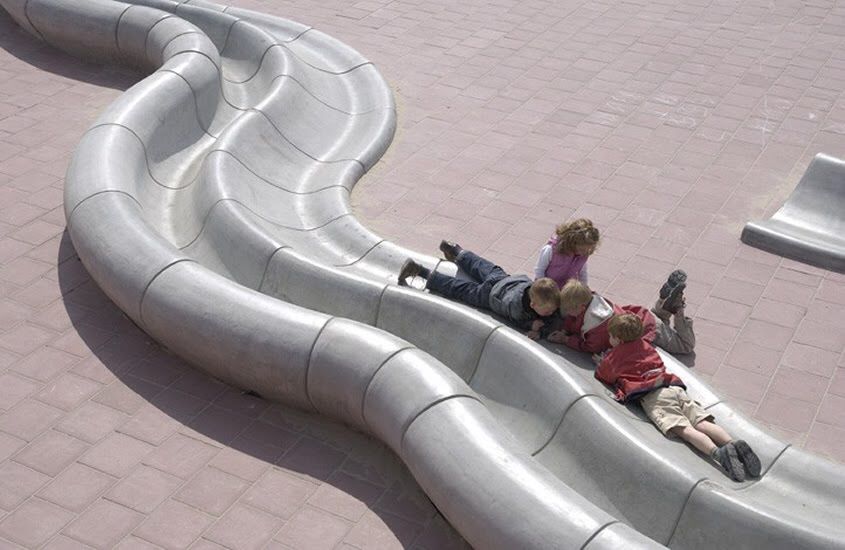
In extreme environments, choosing a partner with proven experience in high-temperature and desert projects is essential to minimizing engineering risks.
We not only provide core material solutions such as GFRC and weather-resistant metals, but also offer strong capabilities in custom design, manufacturing, and project delivery. Based on specific sunlight intensity and environmental conditions, we can recommend appropriate surface treatments to optimize performance.
For large-scale urban development projects, strict quality control and remote installation support are equally critical. Only products that have been tested against real sandstorms and extreme temperature variations—while maintaining structural integrity—can truly deliver long-term value.
If you are planning an urban project in the Middle East or other high-temperature, sand-prone regions, we invite you to review our completed case studies. We provide comprehensive customization services and support large-scale production to meet your project needs.