Why Some Street Furniture Cracks or Fades Quickly
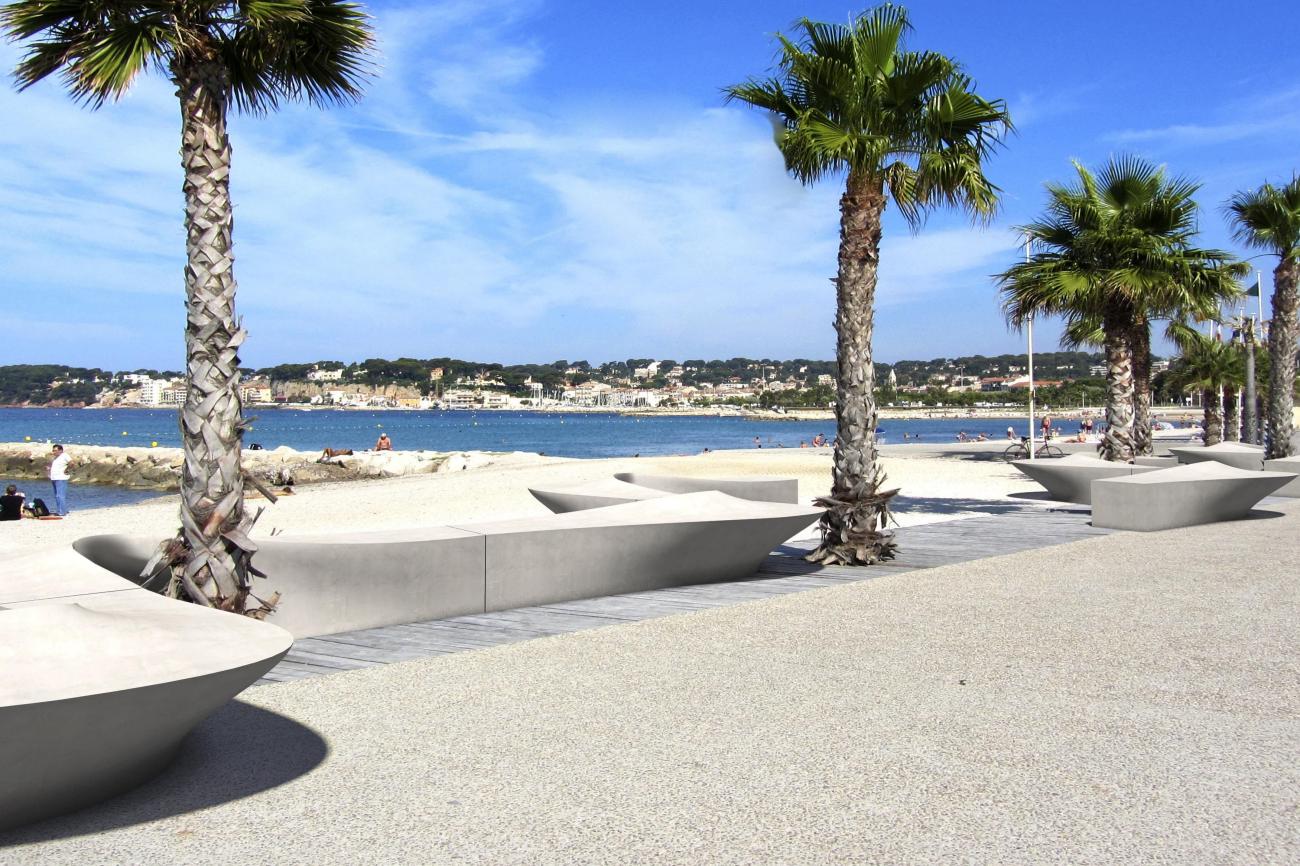
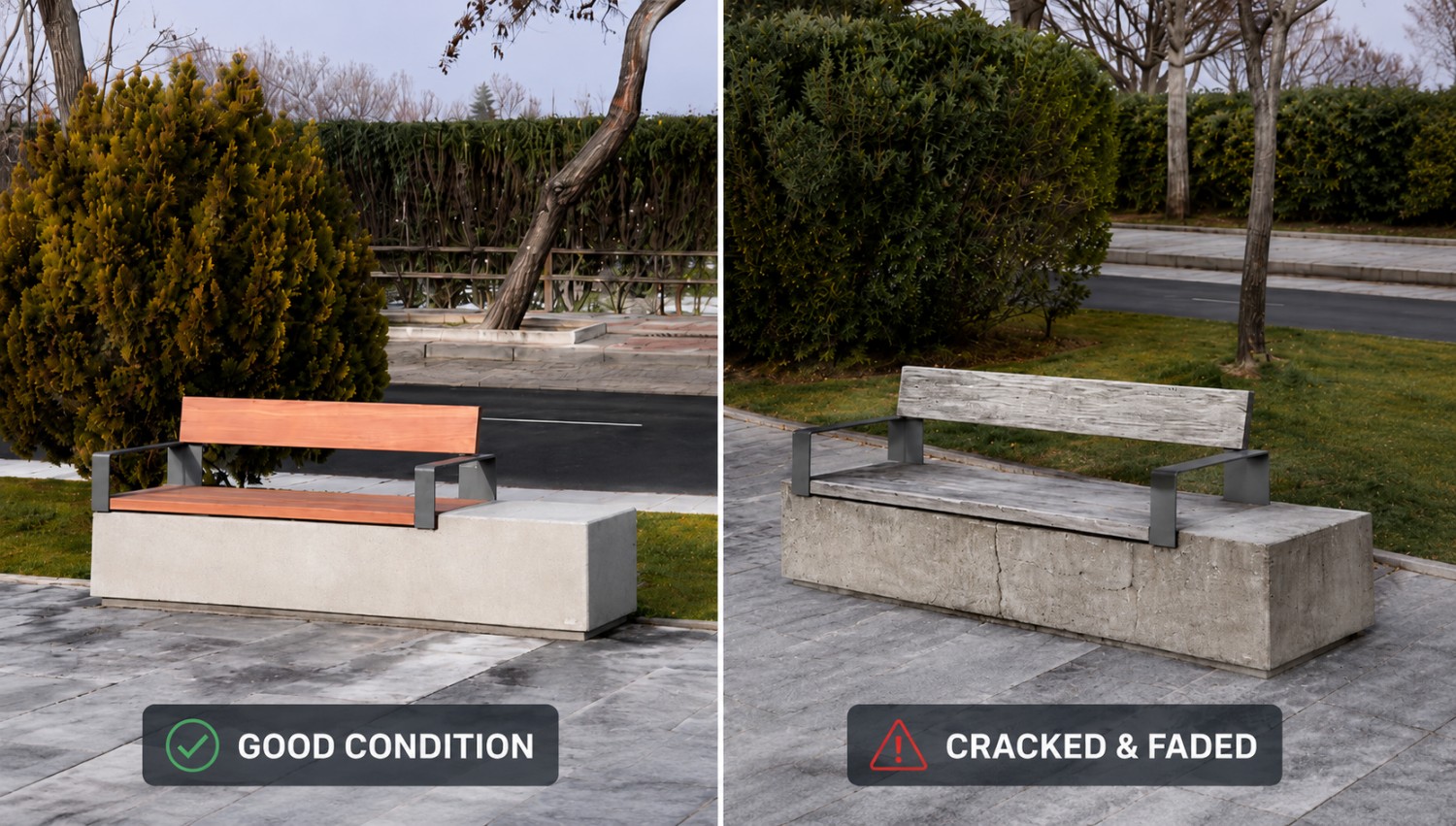
In urban furniture projects, some benches, planters, and public litter bins remain in good condition after years of use, while others quickly begin to crack, fade, or deteriorate.
This is usually not caused by materials alone. Structural design, surface treatment, manufacturing quality, and the operating environment also affect long-term performance. Planning for these factors in advance can reduce future maintenance requirements and extend product service life.
1. Material Selection Does Not Match the Project Environment
Different climate conditions create different requirements for street furniture.
For example:
- Prolonged exposure to high temperatures and strong UV radiation
- Salt spray corrosion in coastal areas
- Surface abrasion in regions affected by wind-blown sand
- Accelerated material aging in highly humid environments
If these factors are not fully considered at the beginning of a project, the products may look good when first installed but show obvious deterioration within a few years.
Our Approach
At the start of each project, we evaluate and select materials based on the local climate, usage scenarios, and maintenance requirements.
Whether the project uses GRC, stainless steel, or other outdoor materials, we focus on long-term weather resistance rather than the initial appearance alone.
2. Structural Design Affects Long-Term Durability
Many cracking problems are not caused by the material itself but are related to structural design.
For example:
- Excessive stress concentrated in specific areas
- Insufficient supporting structures
- Inadequate reinforcement for large-scale products
- Thermal expansion and contraction not being fully considered
These problems may not be obvious immediately after installation, but cracks can gradually appear over time.
Our Approach
During the design stage, our design and engineering teams work together to evaluate and optimize the product structure.
While maintaining the intended visual effect, we fully consider product dimensions, load distribution, and operating conditions to reduce the risk of cracking at the source.
3. Surface Treatment Determines Long-Term Color Retention
For many street furniture projects, fading often occurs earlier than cracking.
Long-term UV exposure affects the color and texture of material surfaces. An unsuitable surface treatment can accelerate this process.
Common problems include:
- Gradual color fading
- Loss of the original surface texture
- Aging or peeling coatings
- Noticeable differences between older and newer products
Our Approach
Based on the environmental conditions of each project location, we select surface treatment solutions suitable for outdoor applications, with a particular focus on long-term color stability.
4. Early-Stage Project Planning
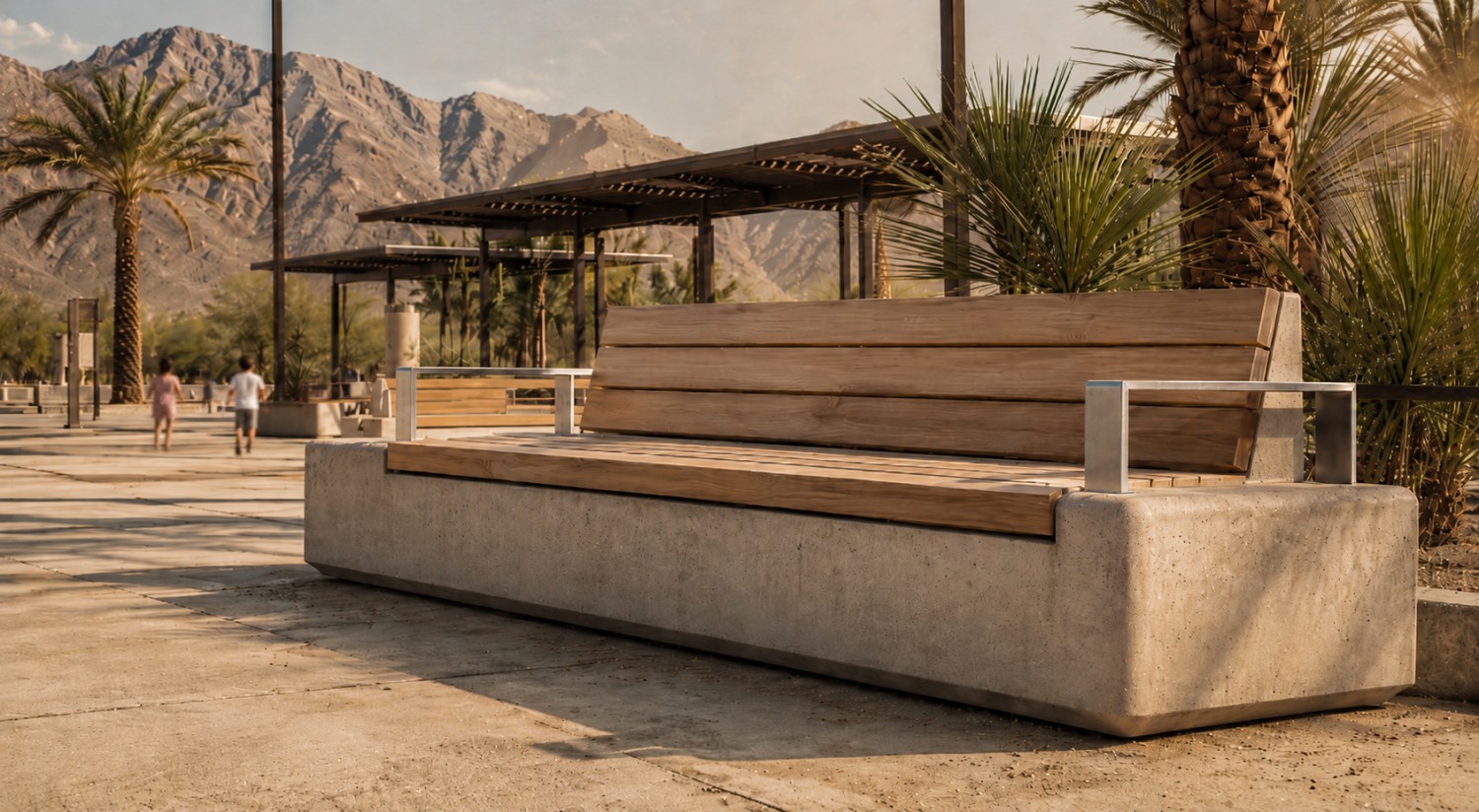
During the planning stage, many projects focus more on budget, appearance, and delivery schedules while overlooking the operating environment and maintenance requirements over the following years.
In fact, whether street furniture can remain in good condition over the long term is often determined at the beginning of the project.
Our Approach
During project planning, we comprehensively consider:
- Operating environment
- Material selection
- Structural design
- Manufacturing processes
- Future maintenance requirements
Each project is followed by a dedicated team, coordinating the entire process from design and production to delivery. This helps clients reduce the risks associated with long-term use.
Conclusion
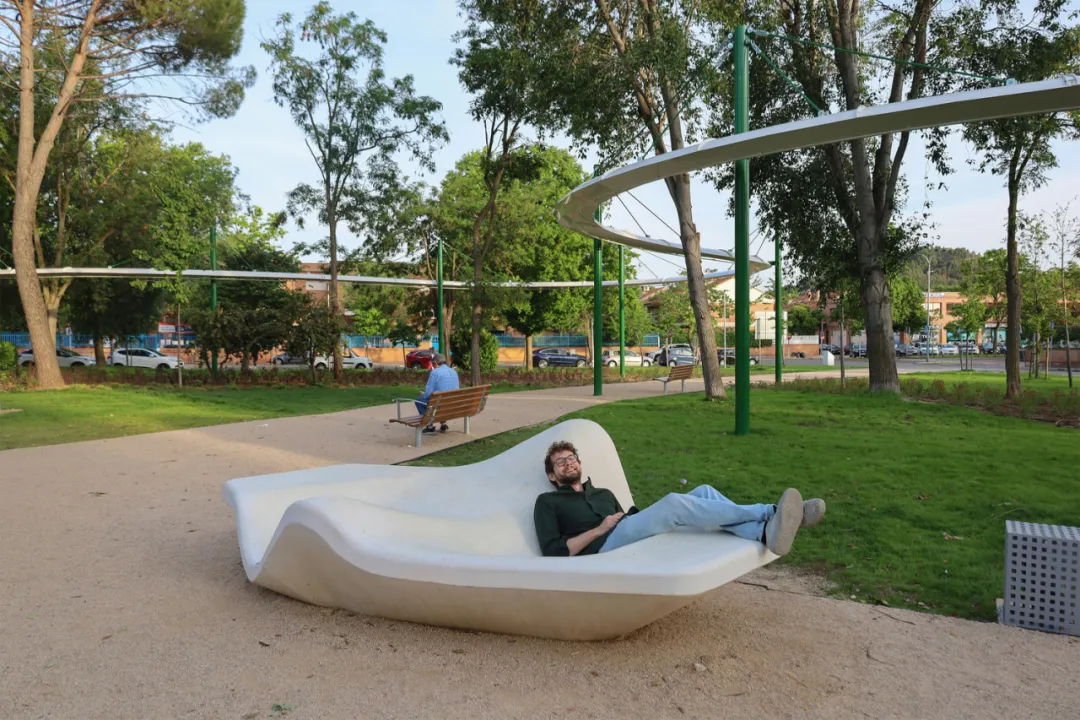
To ensure the long-term performance of urban furniture, the most appropriate approach is to first understand the local climate, usage frequency, and site conditions, and then select suitable materials, structural solutions, and surface treatment processes accordingly.
Only by considering these factors together can projects reduce cracking, fading, and frequent maintenance issues.
Through early-stage planning, coordinated production, and project delivery support, Urban Furniture provides street furniture solutions better suited to real-world operating conditions, ensuring greater durability while meeting the overall design requirements of public spaces.